
Practical safety advice for China tourists: common scams, emergency numbers, solo female travel tips, and what to actually worry about.
Quick answer
China is generally very safe for foreign tourists, including solo female travelers. Violent crime against tourists is rare. The main issues tourists face are: common tourist scams (especially in Beijing, Shanghai, Xi’an), pickpocketing in crowded areas, and traffic accidents (always use designated crosswalks, be careful with e-bikes). See Daily Life for practical everyday tips.
Is China safe?
- Violent crime rates are very low compared to most Western countries.
- Solo female travelers consistently report feeling safe walking at night in major cities.
- Police presence is visible and generally helpful (though English proficiency varies significantly).
- Mass shootings and gun violence are extremely rare (private gun ownership is heavily restricted).
- Main risks are: traffic (e-bikes are silent and fast), scams, and petty theft in crowded tourist areas.
- Natural disaster risks include: typhoons on the south coast (July-September), earthquake risk in Sichuan/Yunnan, and occasional flooding in summer.
Common scams to know
The scams below are widely reported by travelers in major tourist areas. They are presented as known patterns to be aware of, not as an indication that they happen to most tourists. Most visitors to China encounter no scams at all.
1. Tea ceremony scam / art student scam
A friendly young person (often speaking good English) approaches you at a tourist area, strikes up a conversation, and invites you to a traditional tea ceremony, art exhibition, or cultural experience. They are friendly, appear to be students, and the invitation seems genuine. At the end, you are presented with an exorbitant bill (hundreds or thousands of RMB).
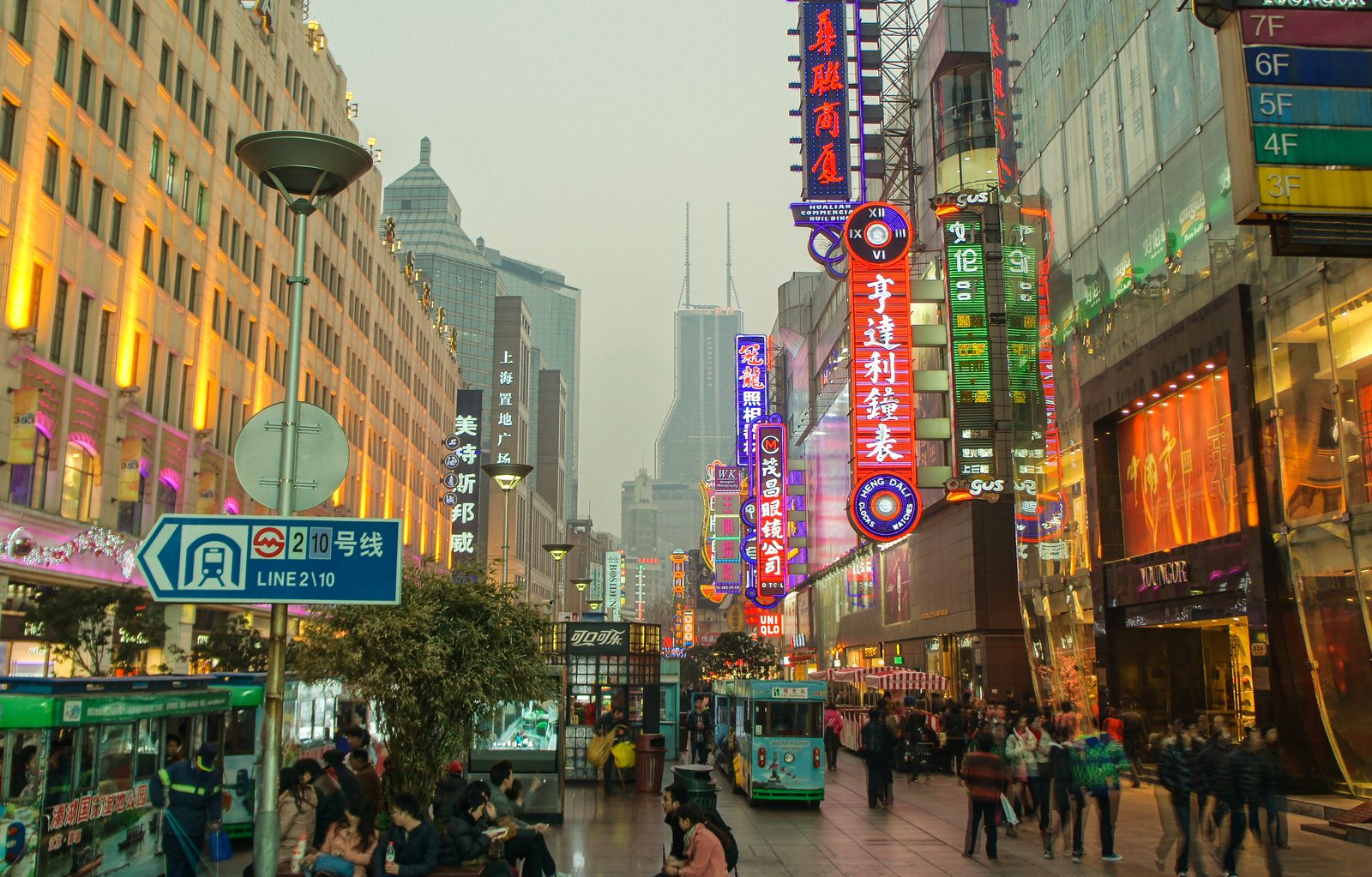
- Where it happens: Beijing (near Wangfujing, Tiananmen Square, the Forbidden City entrance), Shanghai (Nanjing Road, the Bund, People’s Square), Guilin (Yangshuo West Street), and other major tourist areas.
- Rule: If a stranger approaches you speaking English and invites you somewhere, politely decline. Genuine Chinese people who want to practice English will usually chat with you in a public place, not invite you into a building.
2. Black taxi / unlicensed taxi
At airports, train stations, and major tourist sites, drivers approach you offering rides. They often speak some English, may claim the taxi line is very long, or that the metro is closed. They charge 2-5 times the metered rate.
- What to do: Use the Didi ride-hailing app, join the official taxi rank (look for the taxi stand sign with people queuing), or take the airport metro/train. Ignore drivers who approach you inside arrival halls or outside the official taxi queue.
- Note: Legitimate taxi drivers wait in designated queues; they do not approach customers in arrival halls.
3. Fake “student” artists
People claiming to be art students selling “traditional” calligraphy or paintings on the street or in tourist areas. They may show a “student ID.” The art is mass-produced, not original, and sold at inflated prices.
- Politely decline and walk away.
4. Attraction “shortcuts” / “closed today”
People near major attractions (Forbidden City, Terracotta Army, Great Wall entrances) telling you the site is closed today, or that it’s a special free day elsewhere, and offering to take you to a different attraction (typically a jade factory, tea house, or silk shop that pays them commission).
- What to do: Ignore them and walk to the official entrance/ticket office. Check the official website or your booking confirmation before believing anyone. Major attractions like the Forbidden City do not randomly close without notice posted online.
5. Counterfeit money
Receiving counterfeit 100 RMB notes as change from small shops or taxis. This is increasingly rare but can still happen.
- Prevention: Use mobile payment (Alipay/WeChat Pay) whenever possible to avoid cash entirely. When receiving change, check 100 RMB notes (feel the texture, hold up to light for watermark, check the security thread). Get cash from ATMs rather than money changers.
6. Overcharging at tourist restaurants
Some restaurants near major attractions (especially in Yangshuo, Beijing tourist streets, and Xi’an Muslim Quarter) do not show prices on menus, have two menus (Chinese vs. foreigner), or add items you did not order.
- Prevention: Always check prices before ordering. Look for restaurants with posted prices and Chinese customers. If a menu has no prices, ask before you sit down.
7. Fake “monks”
People dressed in Buddhist monk robes at tourist sites asking for donations, giving you a small bracelet or blessing, and then demanding money. Real Buddhist monks do not solicit money from tourists at tourist sites.
- Politely decline and walk away. Do not accept any “gift” they offer; they will demand payment after.
8. WeChat “friend request” scam
Adding a random stranger as a WeChat friend (sometimes an attractive person who approaches you at a tourist spot or bar), who then tries to sell you something, run an investment/crypto scam, or invite you to a fake tea ceremony.
- Do not add strangers on WeChat. Be cautious if someone you just met insists on adding you.
Solo female travel
- China is generally considered safe for solo women travelers, with low rates of violent crime against tourists.
- Normal precautions apply: do not accept drinks from strangers, use Didi (which shares your ride details with contacts and has safety features), avoid walking alone in isolated areas late at night.
- Chinese women commonly walk alone at night, especially in city centers.
- Hotel staff are generally helpful and protective toward solo female travelers.
- Verbal harassment is rare compared to many other countries but can occur in nightclub/bar areas.
- Dress code is casual – China has no particular dress restrictions for tourists. Dress for the weather and comfort.
- On public transport (subway, buses), groping and harassment are very rare but not unheard of in extremely crowded conditions. Move to another car if you feel uncomfortable.
What about politics and surveillance?
- As a tourist, you are extremely unlikely to encounter political issues if you use common sense.
- Internet censorship (the Great Firewall) is real – plan VPN or international roaming before arrival (see Internet & eSIM guide).
- Police checkpoints exist in some areas (especially in Xinjiang and Tibet, which most casual tourists do not visit). Carry your passport at all times.
- Avoid political demonstrations (these are very rare) and sensitive political discussions with strangers.
- Photography of military installations, police vehicles, government buildings, and border areas is generally prohibited. When in doubt, do not photograph.
- Surveillance cameras are ubiquitous in Chinese cities, but this is primarily for domestic security and traffic enforcement and does not typically affect tourists.
Emergency numbers
-
110: Police (general emergency)
-
120: Ambulance/medical emergency
-
119: Fire department
-
12308: Ministry of Foreign Affairs consular protection hotline – for Chinese citizens abroad, NOT a general emergency number for foreign tourists in China. Foreign tourists should contact their own embassy or consulate.
-
These numbers have limited English service. If you need emergency help, ask a Chinese person (hotel staff, shopkeeper, bystander) to call for you.
-
Most hotels have staff who can help in emergencies and contact the appropriate services.
-
Save your home country’s embassy or consulate emergency number in your phone before arrival.
-
The general emergency number 112 also works from mobile phones in China and can redirect to the appropriate service.
Practical safety tips
- Carry a photocopy or photo of your passport photo page and visa. Keep the original in your hotel safe when possible.
- Keep your embassy/consulate contact saved in your phone.
- Use Didi (ride-hailing app) instead of unlicensed taxis that approach you. Didi shows the driver’s name, plate number, and route.
- Keep valuables in your hotel safe when possible. Use a money belt or front-pocket wallet in crowded areas (subway, train stations, tourist sites).
- Cross streets carefully. E-bikes (electric scooters) run red lights, drive on sidewalks, and do not always stop for pedestrians. Look both ways even on a green light.
- Do NOT drink tap water. Use bottled water or boiled water (see Daily Life guide).
- Register with your embassy’s travel registration program (STEP for US citizens, similar programs for UK, Canada, Australia, EU nations) before travel.
- Keep a small first-aid kit with basic medications (painkillers, stomach medicine, band-aids, any prescription medications).
- Travel insurance with medical evacuation coverage is strongly recommended.
For altitude safety in Yunnan and mountain regions, see the Yunnan Nature itinerary.
What NOT to worry about
- Being kidnapped or violently attacked: Extremely rare against tourists.
- Food safety at busy restaurants: High turnover means food is generally fresh. Use common sense (avoid food that has been sitting out in hot weather).
- Police harassment of tourists: Rare. Police are generally professional toward foreign visitors, especially in tourist areas.
- Terrorism: Extremely rare in areas visited by most tourists.
- Natural disasters: Except for typhoons on the south coast (July-September) and earthquake risk in Sichuan/Yunnan, major natural disasters are uncommon.
Next steps
Sources
- Emergency numbers (110, 120, 119) are well-established national emergency numbers in China.
- Safety information is editorial synthesis based on widely reported traveler experiences and government travel advisories from multiple countries. There is no single official source for crime statistics against foreign tourists in China.
- Scam descriptions are based on commonly reported patterns over many years; specific tactics evolve over time.
- For daily practical tips (toilets, water, cash, transport safety), see the Daily Life guide.