
Guangzhou places at a glance
These cards are rendered from the same Place records used by routes and booking guidance. Operational facts are maintained once.

Chen Clan Ancestral Hall
陈家祠A richly decorated Lingnan ancestral complex whose roof sculpture, carving and craft displays make it Guangzhou's strongest single architecture stop.
- Booking
- Verify the current booking channel before relying on it.

Shamian Island
沙面岛A shaded former concession district of tree-lined streets and European-style buildings, best treated as a calm architectural walk.
- Booking
- Verify the current booking channel before relying on it.

Beijing Road
北京路步行街A busy pedestrian corridor where preserved road layers, temples, shops and evening crowds overlap in the center of Guangzhou.
- Booking
- Verify the current booking channel before relying on it.
Shangxiajiu Pedestrian Street
上下九步行街A commercial street through old Xiguan where arcaded qilou façades and Cantonese food stops are more valuable than the retail brands themselves.
- Booking
- Verify the current booking channel before relying on it.

Yuexiu Park
越秀公园A large central park combining lakes, wooded slopes and symbols of Guangzhou such as the Five Rams sculpture.
- Booking
- Verify the current booking channel before relying on it.
Sun Yat-sen Memorial Hall
中山纪念堂A monumental octagonal hall and garden commemorating Sun Yat-sen, useful for understanding modern republican history and civic architecture.
- Booking
- Verify the current booking channel before relying on it.
Temple of the Six Banyan Trees
六榕寺A long-established Buddhist temple centered on the distinctive Flower Pagoda, offering a compact religious and architectural stop near the old city.
- Booking
- Verify the current booking channel before relying on it.

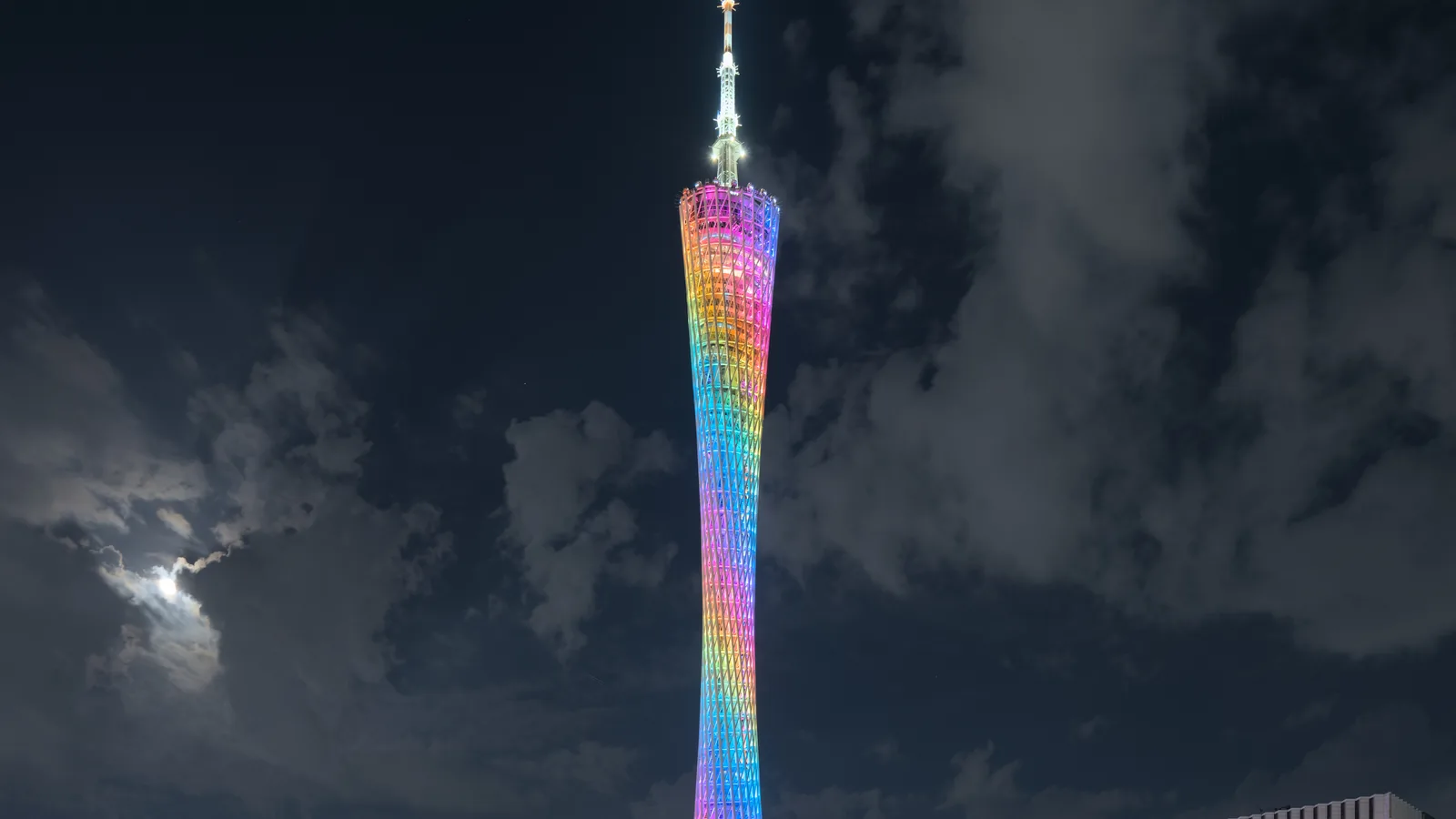
Canton Tower
广州塔Guangzhou's slender landmark on the Pearl River, useful both as a paid observation experience and as the visual anchor of the modern skyline.
- Booking
- Verify the current booking channel before relying on it.

Pearl River Night Cruise
珠江夜游An evening boat experience through central Guangzhou's illuminated river corridor, with products varying by wharf, vessel, deck and route.
- Booking
- Verify the current booking channel before relying on it.
Chimelong Resort
广州长隆旅游度假区A large entertainment resort in Panyu whose theme parks and wildlife attractions require choosing a specific park rather than treating the complex as one stop.
- Booking
- Verify the current booking channel before relying on it.
Guangzhou local dishes to try

Dim Sum and Yum Cha 点心与饮茶
Small steamed, baked and fried dishes shared over tea, forming one of Guangzhou's defining social meals.
Rice Noodle Rolls 肠粉
Silky steamed rice sheets wrapped around fillings or served plain with a light soy-based sauce.
Cantonese Wonton Noodles 云吞面
Fine egg noodles in a clear broth with small shrimp-and-pork wontons, valued for springy texture and clean flavor.
Siu Mei Roast Meats 烧味
Cantonese roast meats displayed in shop windows, including char siu, roast goose and crispy pork.
White-Cut Chicken 白切鸡
Poached chicken served at room temperature with glossy skin and clean meat flavor, usually accompanied by ginger-scallion sauce.
Cantonese Sweet Soups 糖水
A broad family of light Cantonese desserts served warm or chilled, from sesame soup and tofu pudding to mango and sago combinations.
Guangzhou route modules
Classic Guangzhou Day
This route introduces Guangzhou through civic symbols, republican history, a living commercial street and the modern Pearl River skyline. The sequence moves from Yuexiu's wooded slopes into the compact old center before ending in the open riverfront. It works for a first visit because each stop reveals a different layer without requiring a remote excursion. Keep the Canton Tower component flexible: the exterior and riverside remain worthwhile even when visibility makes a paid observation deck poor value.
- Yuexiu Park
- Sun Yat-sen Memorial Hall
- Beijing Road
- Canton Tower
Cantonese Food and Old-City Day
Build this day around eating in small rounds rather than forcing a checklist of famous shops. Start in Xiguan and Shangxiajiu for arcade streets and morning or midday dishes, walk off the meal on Shamian, then finish around Beijing Road with another snack or dessert stop. The route is intentionally modular because restaurant queues and opening patterns vary. Protect the cultural value by looking above storefronts and into side lanes, not only following viral food lists.
- Shangxiajiu Pedestrian Street
- Shamian Island
- Beijing Road
Chimelong Resort Day
Treat Chimelong as a separate resort day, not as one stop in a central Guangzhou itinerary. Choose the specific park that fits your group before traveling to Panyu, then preserve most of the day for that park's scale, queues and internal movement. The module deliberately avoids combining a wildlife attraction, amusement park and evening show into one universal promise. Families should build in meal and rest breaks, while culture-focused short stays may reasonably skip the resort entirely.
- Chimelong Resort
Canton Tower and Pearl River Evening
This evening works as two optional layers: a riverfront skyline walk that costs nothing and one paid viewpoint or cruise product chosen for the weather. Do not assume every cruise, wharf or tower ticket is interchangeable. If visibility is poor, keep the public waterfront and skip the observatory; if rain or vessel conditions reduce deck access, choose an indoor evening instead. The sequence is designed to preserve the skyline experience without making it dependent on a single ticket.
- Canton Tower
- Pearl River Night Cruise
Lingnan Architecture Half Day
This half day compares three architectural layers without pretending they are one continuous style. Chen Clan Ancestral Hall concentrates Lingnan craft, Shangxiajiu shows commercial arcades adapted to climate, and Shamian reveals the concession-era streetscape. Move slowly enough to inspect rooflines and upper floors, not just shopfronts. The route is mostly urban walking, with shade in parts, and pairs naturally with dim sum before the first stop or dessert after the final walk.
- Chen Clan Ancestral Hall
- Shangxiajiu Pedestrian Street
- Shamian Island
Guangzhou Closure-Day Fallback
Use this as a flexible closure-day framework, not a claim that every named venue is always open. Begin with a compact religious or civic site after checking its current notice, then move toward central Guangzhou where covered shopping, food and short heritage stops provide alternatives. The module avoids repeating weekly closure rules because those belong to each Place record. Its real value is geographic: all three areas allow quick substitutions when weather or a temporary notice changes the plan.
- Temple of the Six Banyan Trees
- Sun Yat-sen Memorial Hall
- Beijing Road
Guangzhou context worth knowing
Lingnan Culture 岭南文化
Lingnan culture reflects the humid south, maritime exchange and a strong regional language expressed through architecture, craft and everyday life.
- Arcades, ventilation and shaded courtyards respond to climate.
- Regional identity is carried through Cantonese language, food and performance.
- Maritime contact shaped the city without erasing local traditions.
Cantonese Cuisine Culture 粤菜文化
Cantonese dining prizes ingredient freshness, careful texture and social rituals from morning tea to roast-meat shops and late desserts.
- Yum cha is a shared social meal, not simply a basket of dumplings.
- Subtle seasoning does not mean the cuisine lacks technique or variety.
- Markets, roast shops and dessert rooms form part of the city's daily food landscape.
Xiguan Houses and Arcade Streets 西关大屋与骑楼
Old Liwan preserves the spatial logic of merchant houses and arcaded streets adapted to rain, heat and dense commerce.
- Qilou arcades shelter pedestrians while allowing shops to open directly to the street.
- Xiguan houses reveal merchant wealth through timber, screens and layered rooms.
- The most useful experience comes from connecting several streets rather than treating one façade as the whole story.
Pearl River Maritime Trade 珠江海上贸易
Guangzhou's identity was shaped by long-distance trade through the Pearl River system and its role in the Maritime Silk Road.
- The city's global connections long predate the modern skyline.
- Commercial exchange influenced neighborhoods, institutions and food culture.
- River views are also views of the infrastructure that made Guangzhou a trading city.
Quick answer
Guangzhou rewards travelers who plan around neighborhoods and meals rather than a checklist of monuments. Its strongest first visit connects Lingnan architecture in the older western districts, the long history of Pearl River trade, modern riverfront views and the daily social ritual of yum cha.
Two days cover the essential contrast; three days allow a slower food-led route; a fourth day creates room for Chimelong or another focused excursion.
Booking warnings
Many ordinary urban stops can be approached flexibly, but high-capacity attractions, special experiences and cruises follow their own current rules. Read the Place cards on this page and verify the official channel before payment. Selecting “passport” in an online form is useful evidence, but it does not guarantee that every foreign card, phone number or identity flow will complete successfully.
Best Areas to Stay
Yuexiu is the most balanced first base for older sights and broad transport access. Liwan suits travelers who want Xiguan streets, food traditions and a slower neighborhood atmosphere. Zhujiang New Town works for modern hotels, riverfront evenings and business travel. Haizhu offers river access and fairground convenience, while Tianhe favors shopping and onward rail connections.
Choose the area that matches the first full day. Crossing the city repeatedly for breakfast, old-town walking and an evening cruise wastes the advantage of Guangzhou’s neighborhood clusters.
Arrival & Transport
The airport and major railway stations serve different corridors, so copy the full station name into your route rather than assuming “Guangzhou Station.” Metro is the default backbone, with taxis useful for the final connection or during heavy rain.
For cross-border or high-speed rail, use the high-speed rail guide and carry the same passport used for the booking. For mobile setup and navigation, see internet, eSIM, VPN and maps.
Top Sights
Chen Clan Ancestral Hall is the clearest introduction to Lingnan decorative craft. Shamian Island, Shangxiajiu and Beijing Road show different layers of the trading city. Yuexiu Park and the Sun Yat-sen Memorial Hall add civic memory, while the Temple of the Six Banyan Trees provides a living religious setting.
Canton Tower and the Pearl River night cruise are alternative ways to frame the modern skyline. Chimelong is a dedicated day, not a quick extension to the historic core.
Classic Routes
For two days, pair Guangzhou Classic Day with the Cantonese Food Day or Historical Walk Half-Day plus a Pearl River evening. A third day can focus on modern Guangzhou or Chimelong. Keep the Monday fallback module available instead of discovering a closure after crossing the city.
The canonical route modules above hold reusable stop order and fallback logic while leaving changing operational details with the Places that own them.
Food to Try
Start with yum cha and dim sum, then branch into rice-noodle rolls, wonton noodles, roast meats, white-cut chicken and tong sui. Cantonese food is often described as “light,” but the more useful idea is ingredient clarity: texture, freshness, stock and careful cooking matter as much as chili or spice.
Do not treat dim sum as a late-night snack. It is a meal rhythm and social practice, and the food blocks above explain how to order without tying the guide to a single restaurant.
Night Experience
An effective Guangzhou evening needs one anchor. Choose a Pearl River cruise, a Canton Tower and Zhujiang New Town viewpoint sequence, or an old-city walk around Beijing Road. Combining all three usually creates more transfers than atmosphere.
Night products and lighting programs can change, so keep exact departure times, prices and show details out of the city narrative and confirm them through the relevant Place.
Best Time to Visit
Autumn and winter are generally the easiest seasons for long walks and outdoor meals. Spring can be humid and wet; summer heat, heavy rain and typhoon disruption make midday rest and indoor alternatives important. Major trade-fair periods can affect hotel availability even when leisure attractions are operating normally.
Culture & History
Guangzhou’s identity comes from long-distance trade, Cantonese language and cuisine, and the distinctive architecture of Lingnan and Xiguan. Arcade streets respond to heat and rain; clan halls turn craft into architecture; the Pearl River connects the historic port to the modern metropolis.
The Culture blocks above keep these explanations reusable across Places, routes and future topic pages.
Accessibility & Tips
Modern districts and the metro are generally easier to navigate than older lanes, temple thresholds and park slopes. Travelers with limited mobility should choose flatter clusters such as Shamian and the modern riverfront, verify step-free entrances at individual Places and avoid overloading one day with distant districts.
Keep attraction names and addresses in Chinese. In food settings, a saved translation for allergies or dietary restrictions is more reliable than expecting every server to interpret an English label the same way.
Common mistakes
- Treating Guangzhou as only a transfer city and missing its strongest food and neighborhood experiences.
- Scheduling a famous restaurant instead of building flexibility around a food category.
- Combining Chimelong with an old-city sightseeing day.
- Assuming every museum or historic site follows the same weekly closure pattern.
- Booking both a river cruise and a paid tower experience without deciding which view matters more.
Extend the route when you have more time
Use a destination as an anchor, then add nearby or well-connected places instead of stretching one city across the whole trip.