
How to think about train booking, passports, station flow, seats, and luggage for intercity China travel.
Quick answer
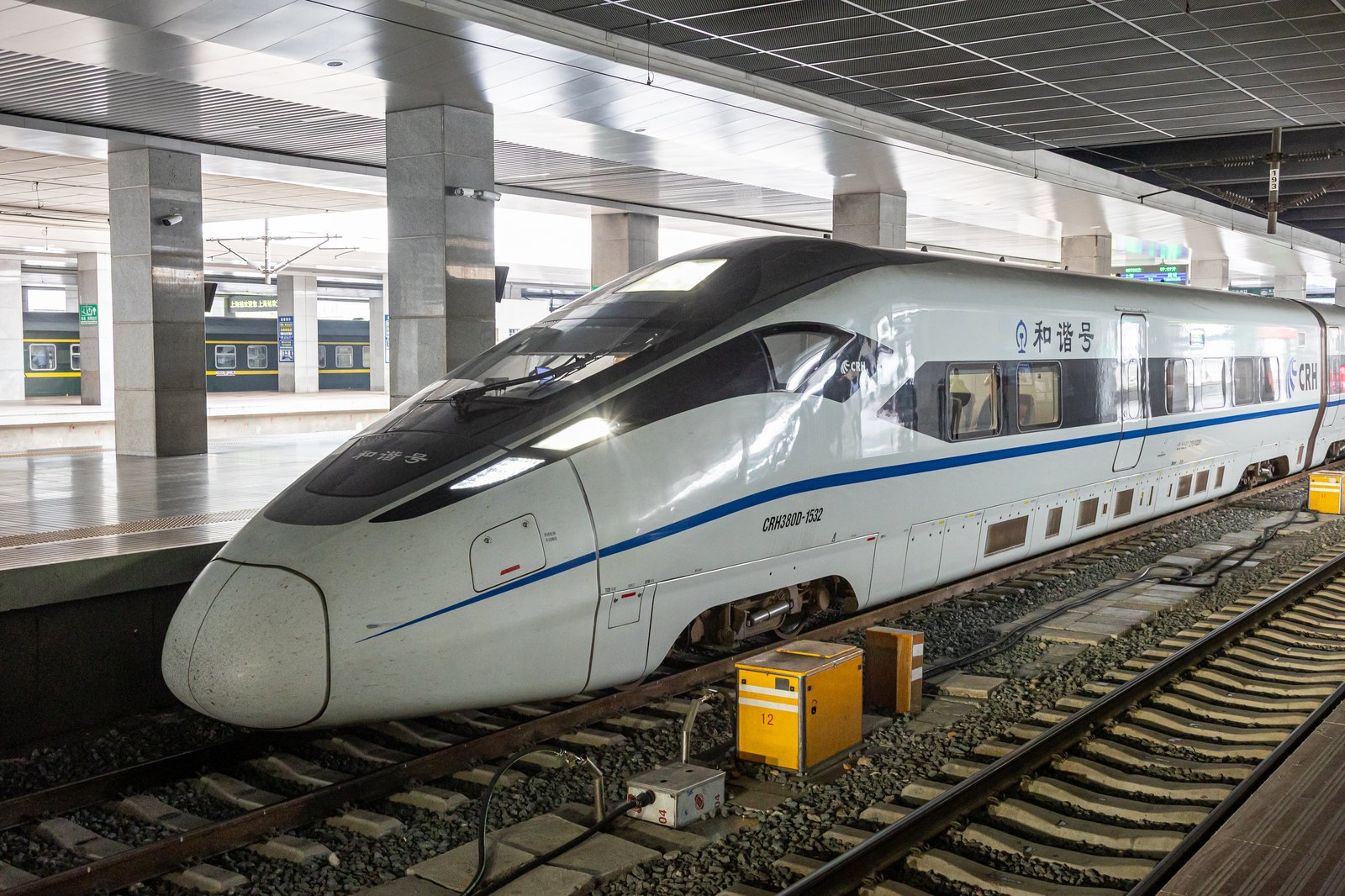
High-speed rail is often the best way to connect major first-trip cities, but it is not always better than flying. The main visitor friction is usually booking, identity documents, station scale, and timing.
The official 12306 English site (12306.cn/en) supports ticket purchase, endorsement, refund, and ticket changes. Foreign passport holders who register on 12306 can board most G/D/C (high-speed) trains using their passport – e-ticket with passport scan at automatic gates or manual ID check at staffed gates.
Foreign passport boarding: corrected facts
- Foreign passport holders registered on 12306 can use e-ticket (passport as ID) for most G/D/C high-speed services.
- Paper tickets are NOT mandatory for most high-speed services. You do not need to collect a paper ticket before boarding.
- Automatic gates may not always read foreign passports reliably. Allow extra time for manual ID check at a staffed gate if the automatic gate fails.
- Some older conventional K/T/Z trains may still require paper tickets. Bring your original passport.
- If online passport verification fails, go to a train station ticket office with your passport to complete verification in person.
Before booking
- Compare train time against airport transfer time. For distances under ~1,000 km, high-speed rail is often faster door-to-door than flying (no need to arrive 2 hours early, stations are in city centers).
- For longer distances, domestic flights may save time. See the Luggage & Domestic Flights guide for flight rules and dual-airport warnings.
- Keep passport details consistent across bookings.
- Leave buffer time for large stations (major stations can be enormous; 30-45 minutes before departure is a safe minimum).
- Check if the route is better as a day train or flight.
- Prefer official 12306 or reputable booking channels (Trip.com for English interface).
CAAC power bank reminder (for flights)
If you are also taking domestic flights in China, remember: power banks MUST be in carry-on baggage only (never checked), must be under 100Wh for automatic approval, and since 2025-06-28 power banks on DOMESTIC flights must have a valid CCC (3C) certification mark. Non-certified power banks may be confiscated. See the Luggage & Domestic Flights guide for full details.
Station flow
Most travelers should plan for security, identity-document checks, waiting hall, gate opening, platform access, boarding, and luggage placement. Large stations (Beijing South, Shanghai Hongqiao, Chengdu East) can have long walks between entrance and gates.
Seats
- Second class (二等座): Standard, most common, comfortable enough for most journeys.
- First class (一等座): Wider seats, more legroom, ~50-80% more expensive.
- Business class (商务座): Premium, significantly more expensive.
Luggage on trains
- There is no strict checked baggage weight limit enforced for carry-on on high-speed trains (within reason – large/heavy bags should be checked or shipped).
- Luggage racks are available at the ends of cars and above seats.
- Power outlets are available at most seats (bring a charger).
- For luggage storage at stations (if arriving early or departing late), see the Luggage & Domestic Flights guide.