
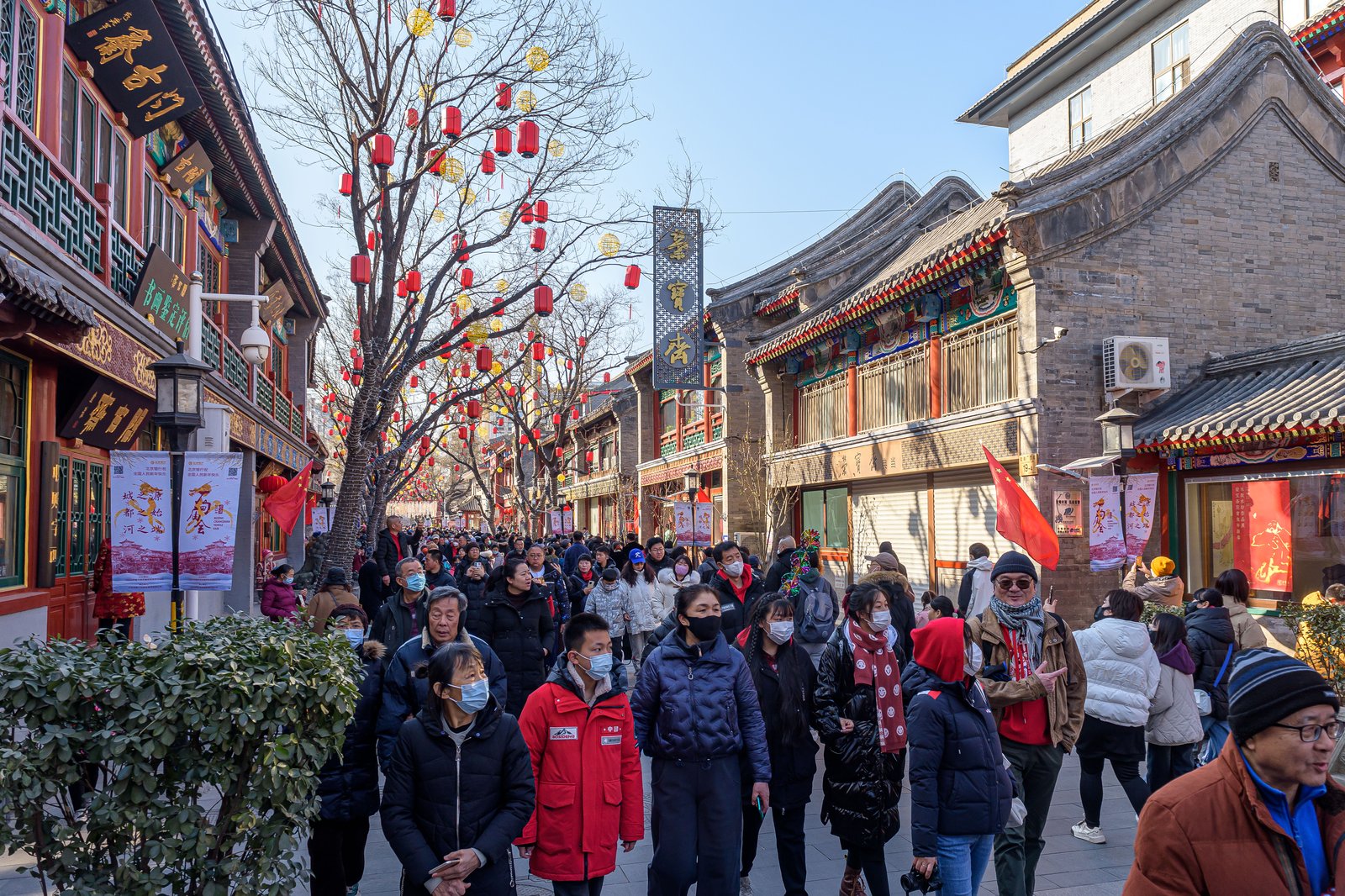
Official 2026 public-holiday dates, the pending 2027 schedule, school-break and Spring Festival travel-rush cautions, plus practical crowd and commute-peak avoidance tips.
Quick answer
For a lower-crowd trip, avoid China’s official public-holiday breaks where possible—especially Spring Festival, Labor Day and National Day—plus the Spring Festival travel rush and the July–August school summer break. Major attractions are also usually easier on an ordinary weekday than on a weekend. School calendars, attraction capacity and crowd patterns vary, so this is a planning guide rather than a guarantee of quiet conditions.
Status checked July 14, 2026: the State Council has published the complete 2026 holiday and make-up workday schedule. The official 2027 holiday schedule has not yet been published / is pending. Do not treat the 2027 observance-date watchlist below as a prediction of days off, linked weekends or make-up workdays.
Official 2026 public-holiday schedule
These dates and make-up workdays are from the State Council General Office notice (国办发明电〔2025〕7号), issued November 4, 2025.
| Holiday | Official days off in 2026 | Make-up workdays |
|---|---|---|
| New Year’s Day (元旦) | Jan 1 (Thu)–Jan 3 (Sat), 3 days | Jan 4 (Sun) |
| Spring Festival (春节) | Feb 15 (Sun)–Feb 23 (Mon), 9 days | Feb 14 (Sat) and Feb 28 (Sat) |
| Qingming Festival (清明节) | Apr 4 (Sat)–Apr 6 (Mon), 3 days | None stated |
| Labor Day (劳动节) | May 1 (Fri)–May 5 (Tue), 5 days | May 9 (Sat) |
| Dragon Boat Festival (端午节) | Jun 19 (Fri)–Jun 21 (Sun), 3 days | None stated |
| Mid-Autumn Festival (中秋节) | Sep 25 (Fri)–Sep 27 (Sun), 3 days | None stated |
| National Day (国庆节) | Oct 1 (Thu)–Oct 7 (Wed), 7 days | Sep 20 (Sun) and Oct 10 (Sat) |
Make-up workdays can produce weekday-like commuting and business patterns on a Saturday or Sunday. Check the official notice rather than assuming every weekend is a rest day.
2027: official schedule pending
As of July 14, 2026, no State Council General Office notice setting the 2027 public-holiday breaks and make-up workdays appears in the official policy-document library. The dates below are festival observance dates only, cross-checked against the Hong Kong Observatory’s Gregorian–lunar calendar. They are useful as an early planning watchlist, but they are not an official mainland China days-off schedule.
| 2027 observance watchlist | Festival date only | What is still unknown |
|---|---|---|
| New Year’s Day | Jan 1 (Fri) | Linked days off and any make-up workdays |
| Spring Festival / Lunar New Year | Feb 6 (Sat) | The official holiday span and any make-up workdays |
| Qingming Festival | Apr 5 (Mon) | The official holiday span and any make-up workdays |
| Labor Day | May 1 (Sat) | The official holiday span and any make-up workdays |
| Dragon Boat Festival | Jun 9 (Wed) | The official holiday span and any make-up workdays |
| Mid-Autumn Festival | Sep 15 (Wed) | The official holiday span and any make-up workdays |
| National Day | Oct 1 (Fri) | The official holiday span and any make-up workdays |
Recheck this page—or the State Council policy library—after the formal 2027 notice is released. Do not book non-refundable travel based on guessed bridge days.
The crowd periods that matter beyond the legal holidays
- Spring Festival travel rush (春运 / Chunyun): intercity demand builds before Lunar New Year and continues after it as people travel home and return. Its operating dates and transport arrangements are announced for each year, so check the current railway, airport and transport-authority notices rather than applying a fixed date formula.
- Summer school break: July and August are a broad national planning warning for family travel, popular museums, theme parks and major scenic areas. Exact school dates vary by province, city, school and year.
- Winter school break: often falls around January and February and overlaps the Spring Festival period, but dates vary locally and should not be presented as one nationwide calendar.
- Ordinary weekends: famous urban museums, landmark scenic areas, theme parks and easy day trips can be busier than on weekdays even outside public holidays.
- Local events: trade fairs, concerts, exhibitions, temple fairs and destination-specific festivals can create a spike that a national calendar will not show.
A practical low-crowd planning strategy
- Choose ordinary weekdays first. Place the Forbidden City, major museums, headline mountain routes and theme parks on Tuesday–Thursday when their opening calendars allow. Always check each attraction’s closure day.
- Use the first entry window—or a later window. The first timed slot often helps you enter before tour groups build up. A later slot can work where operating hours, last-entry rules and transport back to your hotel leave enough time. Midday is not automatically quiet.
- Reserve before you travel. High-demand sites may use real-name, timed or capacity-controlled admission. Check the official attraction channel for the current release timing and passport rules; there is no universal booking window.
- Keep a swap-ready itinerary. If weather or live crowd conditions look poor, exchange the headline sight for a neighborhood walk, city park, less-famous historic street, smaller specialist museum or secondary branch of a larger museum.
- During a holiday, change the type of day—not just the hour. Residential neighborhoods, large parks, local markets, architecture walks and secondary museums may be more manageable alternatives to national icons. They can still be crowded or temporarily controlled, so check local notices and do not assume “hidden” means empty.
- Avoid stacking transport and attraction peaks. A packed morning intercity arrival followed by a fixed attraction slot leaves little recovery time. Add buffer and stay near your first major sight when practical.
If you must visit a major attraction at a busy time
- Prefer a working weekday within your available dates, including checking whether a weekend has been converted into an official make-up workday.
- Book through the attraction’s official site, app or WeChat channel as soon as its current booking window permits.
- Select the first available entry period or a later period that still gives you adequate visiting time.
- Carry the physical passport used for booking and allow time for security and identity checks.
- Decide in advance what would make you leave or switch plans: unavailable tickets, temporary crowd controls, severe weather or an impractical wait.
- Treat published opening hours, ticket-release rules and entry gates as changeable; verify shortly before the visit.
See Attraction Booking for the booking workflow and passport cautions.
Avoiding urban commute peaks
China does not have one legally defined nationwide “rush hour.” A useful planning rule of thumb for major cities on ordinary workdays is to avoid the core 07:00–09:00 morning period and 17:00–19:00 evening period when your schedule is flexible. Some corridors become busy earlier or stay busy later, and school terms, rain, events, make-up workdays and station crowd controls can shift the peak.
Official examples show why the range is only a guide:
- Beijing: the city’s road-traffic standard describes typical workday peaks as 07:00–09:00 and 17:00–19:00. Metro demand varies sharply by line and direction.
- Shanghai: the municipal bus service standard allows high-peak services broadly around 06:00–08:30 and 16:30–19:00, showing that some services begin their peak pattern outside the simple 07:00–09:00 rule.
- Guangzhou: the local road-traffic standard describes typical workday peaks as 07:00–09:00 and 17:00–19:00; individual metro stations may apply narrower crowd-control periods.
- Shenzhen and Chengdu: line, direction and district matter more than a single citywide clock. Check the local metro app or operator’s current notices for your actual route.
Practical moves:
- For sightseeing, aim to board after about 09:30 or before about 16:30 when it fits your reservation and opening hours.
- If you must ride at peak time, allow extra time for security, transfers and possible platform or entrance controls. Let a full train pass rather than forcing luggage aboard.
- Avoid bringing large suitcases through central interchange stations during commute peaks; use a direct airport/rail transfer, luggage storage or hotel drop-off when practical.
- Check live navigation and the city’s official metro or bus channel on the day. Weekend and public-holiday crowd peaks often follow leisure patterns rather than weekday commuting patterns.
Transport and booking checks
- Trains: consult the official 12306 sales calendar for your exact travel date and act when the relevant inventory opens. Do not rely on a permanently fixed advance-sale period.
- Flights and hotels: compare refundable options early for holiday travel; availability and prices vary by route, destination, event and booking date.
- Attractions: use the venue’s official channel for release time, admission quota, passport support, closures and last entry.
- Road travel: holiday traffic management and toll policies can affect journey times. Check current transport-authority notices before a long road transfer.
If traveling in winter, consider the Winter Ice Itinerary and verify whether it overlaps Spring Festival or the winter school break.
Next steps
Source and update notes
- Official 2026 days off and make-up workdays: State Council General Office, November 4, 2025.
- 2027 festival dates only: Hong Kong Observatory Gregorian–lunar calendar. This source does not establish mainland public-holiday breaks.
- 2027 official schedule status: checked in the State Council policy-document library on July 14, 2026; not yet published.
- Commute ranges: planning synthesis from Beijing and Guangzhou road-traffic standards and Shanghai’s bus service standard. They are not a national rule and do not replace route-specific live information.