
Shanghai places at a glance
These cards are rendered from the same Place records used by routes and booking guidance. Operational facts are maintained once.

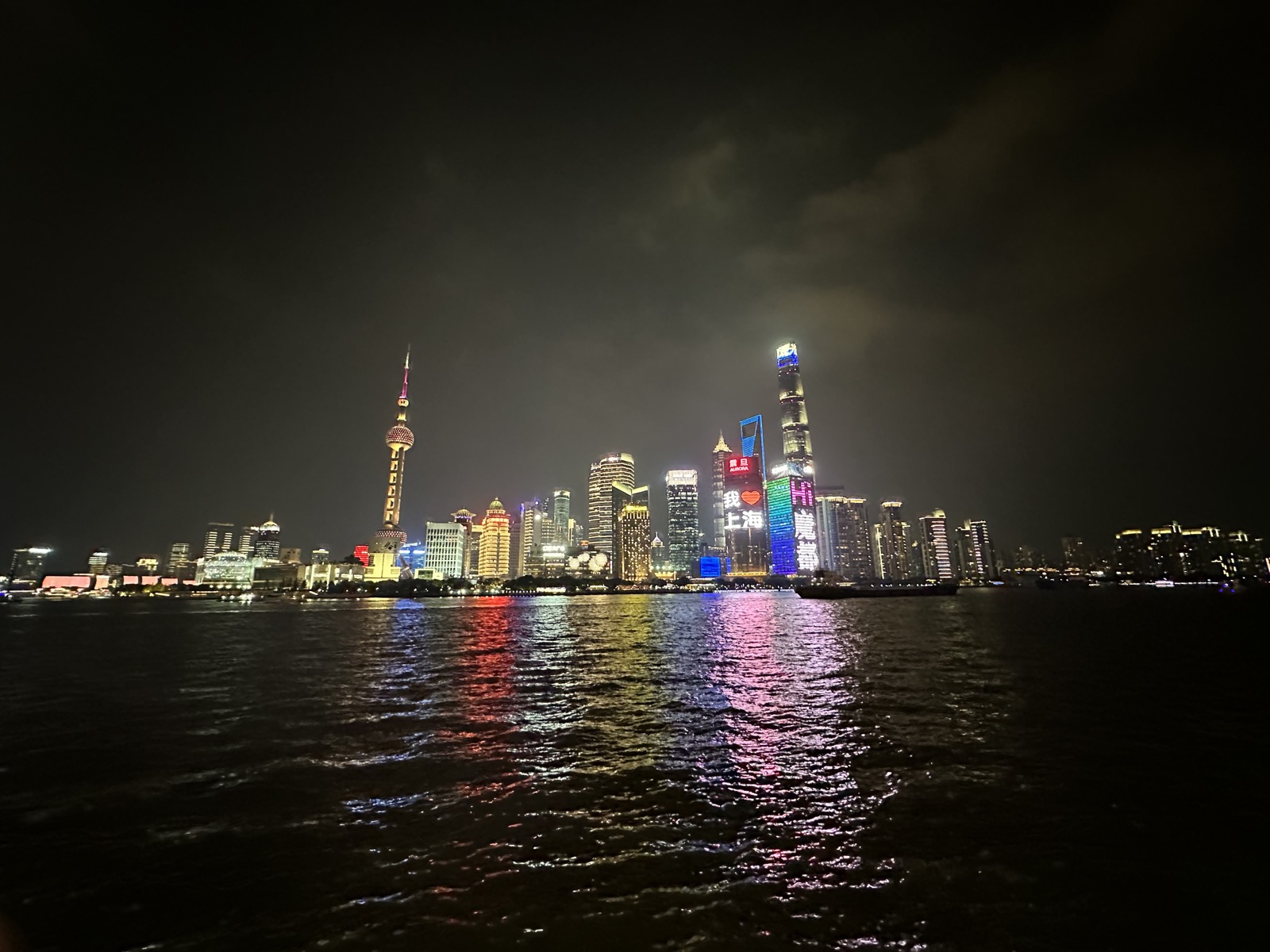
The Bund is Shanghai's iconic waterfront promenade along the west bank of the Huangpu River, lined with 52 restored early-20th-century Western-style buildings that once formed the financial heart of treaty-port Shanghai. Across the river rises the Lujiazui skyline, creating Shanghai's most photographed view.
- Booking
- Open public space. No tickets, no reservation, no ID check.
Current practical details
- Passport
- No passport or ID check. Foreign visitors have equal access.
- Hours
- Open 24 hours daily. The promenade is a public waterfront walkway with no gates or closing time. Building illumination follows a separate seasonal or event schedule and is not guaranteed at one fixed time.
- Admission
- Free. The Bund promenade is a public walkway with no admission fee. The Bund Sightseeing Tunnel is a separate paid attraction and is not part of the promenade.
Yu Garden is a classical Jiangnan-style garden in the heart of Shanghai's Old City, first built in 1559 during the Ming dynasty. It is one of the few genuine classical gardens within central Shanghai and features rockeries, pavilions, corridors, and the iconic Nine-turn Bridge (九曲桥) over a central pond. The garden itself is a paid ticketed site; the surrounding Yuyuan Bazaar (豫园商城) and City God Temple area are free commercial districts.
- Booking
- Normal daytime visits do not require advance booking. Buy on arrival or use the official mini-program; carry the original passport if booking or buying under a passport number.
Current practical details
- Hours
- Tuesday-Sunday 09:00-16:30, with last entry at 16:00. Closed Mondays except national public holidays; Spring Festival arrangements may be announced separately.
- Admission
- DAY GARDEN: 40 RMB/adult from April 1-June 30 and September 1-November 30; 30 RMB/adult from July 1-August 31 and December 1-March 31. Eligible students and visitors aged 60+ pay half price with valid documents; children 1.3m or shorter or aged 6 and under enter free. The separate immersive night-tour product is not included in daytime admission and costs substantially more.
Shanghai Museum
上海博物馆Shanghai Museum is one of China's premier art museums, with major collections of ancient Chinese bronzes, ceramics, calligraphy, painting, jade, furniture, coins, and minority art. It operates two distinct branches: the East Branch (东馆) in Pudong and the People's Square Branch (人民广场馆) in Huangpu. Check which branch hosts the collection or exhibition you want before visiting.
- Booking
- East Branch is normally a no-reservation museum visit with original ID; People's Square currently follows its special-exhibition ticket rule. Carry the original passport and use staffed verification if an automated reader cannot process it.
- People's Square Branch: World Tree exhibition schedule
- During 'World Tree: Ancient Civilizations of the Americas' (July 9, 2026-November 14, 2027), the People's Square Branch is dedicated to this exhibition. Day sessions run 09:00-17:00 with last entry at 15:00; announced day-and-night sessions run to 21:00 with last entry at 19:00. Closed Mondays except national holidays. Check the official WeChat notice for the exact night-session date.
Current practical details
- Passport
- Bring the original passport. At East Branch, use the normal B1 East entrance and ask staff for manual verification if the automated document reader does not accept the passport. For the current People's Square special exhibition, overseas visitors can reserve through the official Trip.com international channel and enter with the original booked document.
- Hours
- EAST BRANCH (东馆, Pudong): 10:00-18:00, last entry 17:00; closed Tuesdays except national holidays. Individual visitors normally enter without reservation. PEOPLE'S SQUARE BRANCH (人民广场馆, Huangpu): 09:00-17:00, last entry 15:00; closed Mondays except national holidays. Its current World Tree exhibition requires a ticket or reservation; announced night sessions run to 21:00 with last entry at 19:00.
- Admission
- FREE for permanent galleries at both branches. Special/paid exhibitions priced separately per exhibition (varies; typically 50-100 RMB). Interactive spaces (古代文明探索宫, 数字馆 at East Branch) require advance reservation (free) via WeChat.

Nanjing Road Pedestrian Street is Shanghai's most famous shopping thoroughfare, a 1,033-meter car-free stretch of Nanjing East Road running from People's Square east to the Bund. It features a mix of historic department stores, modern shopping centers, old-brand establishments (老字号), and tourist-oriented shops. It is particularly lively in the evening when neon signs are illuminated.
- Booking
- Open public street. No tickets, no reservation. Beware of pickpockets in crowded periods.
Current practical details
- Passport
- Open to all. No ID check. Foreign visitors have full access.
- Hours
- The pedestrian street is open 24 hours as a public thoroughfare. Individual shops and department stores typically operate 10:00-22:00 (hours vary by store).
- Admission
- Free to walk. No admission to the street. Individual shops have their own pricing.
Tianzifang
田子坊Tianzifang is a revitalized shikumen (stone-gate) lane neighborhood off Taikang Road in the former French Concession area, converted into a maze of narrow alleys filled with art studios, craft shops, cafes, bars, and small restaurants. It retains the residential character of a 1930s lilong (里弄) neighborhood while hosting a thriving creative and commercial scene. Unlike the more polished Xintiandi, Tianzifang is less renovated and retains more of its original lane-house texture.
- Booking
- Open public neighborhood. No tickets or reservation. Can be very crowded on weekends — visit on weekdays if possible.
Current practical details
- Passport
- Open to all. No ID check. Foreign visitors have full access.
- Hours
- The public lanes are accessible 24/7 as residential streets. Individual shops, studios, cafes, and restaurants typically operate approximately 10:00-22:00 (hours vary by establishment; some cafes open earlier, some bars stay later).
- Admission
- Free to enter the lanes. No admission fee. Individual shops and restaurants have their own pricing.
Former French Concession
衡复风貌区(原法租界)The Former French Concession, officially known as the Hengshan-Fuxing Historic Conservation Area (衡复历史文化风貌区), is a leafy, walkable district of plane-tree-lined boulevards and preserved 1920s-30s residential architecture. It is one of Shanghai's most charming neighborhoods for strolling, coffee, and experiencing the city's European-influenced history. Wukang Road and the Wukang Building (Normandie Apartments) are the most famous landmarks; Anfu Road is known for cafes and boutiques; Xintiandi is the most commercialized shikumen redevelopment.
- Booking
- Open public neighborhood. No tickets or reservation. Wukang Road photo spot may have crowd control on weekends.
Current practical details
- Passport
- Open to all. No ID check.
- Hours
- Public streets are open 24/7. Individual shops, cafes, and restaurants typically operate 10:00-22:00 (hours vary; some cafes open earlier for breakfast).
- Admission
- Free. Public streets have no admission. Xintiandi is free to enter (individual venues charge for food/drink/shopping).

Shanghai Tower Observatory
上海中心·上海之巅观光厅Shanghai Tower is China's tallest building at 632 meters. The Top of Shanghai Observatory (上海之巅观光厅) on the 118th-119th floors at 546 meters offers the highest publicly accessible indoor observation deck in China, with 360-degree views over Shanghai on clear days. A separate add-on exhibition on the 125th-126th floors (Tian Shi 632 Art Space, featuring the building's mass damper) is available as an upgrade.
- Booking
- Use an official or authorized channel for a real-name timed ticket, and carry the original booking document. Check visibility before committing to a sunset slot.
Current practical details
- Passport
- Passport is accepted for real-name ticketing and entry. Use an official or authorized channel and bring the original passport used for the booking. Payment and mobile-number requirements can still vary by channel.
- Hours
- Daily 08:30-22:00; last ticket/entry at 21:30. Open year-round including Mondays (no weekly closure day). Hours may be extended or adjusted during holidays.
- Admission
- Current listings start at 180 RMB for standard adult observatory admission; a 268 RMB multi-floor combination is also listed. Products and prices vary by date and channel, so confirm the exact floors and inclusions before payment. Real-name ticketing is required.
Lujiazui CBD
陆家嘴Lujiazui is Shanghai's futuristic financial district on the east bank of the Huangpu River, directly opposite the Bund. It contains China's densest cluster of supertall skyscrapers — Shanghai Tower (632m), Shanghai World Financial Center (492m), Jin Mao Tower (421m), and the Oriental Pearl Tower (468m) — forming China's most iconic modern skyline. The public streets, elevated walkways, and riverfront promenade (Binjiang Dadao) are free to explore.
- Booking
- Free public area. Observation decks require paid tickets (see shanghai-tower record).
Current practical details
- Passport
- Open to all. No ID check for public areas.
- Hours
- Public streets, overpasses, and Binjiang Dadao are open 24/7. Individual observation decks (Shanghai Tower, SWFC, Jin Mao, Oriental Pearl) have their own hours and tickets. The IFC Mall and Lujiazui shopping areas typically operate 10:00-22:00.
Jing'an Temple is an active Buddhist temple and one of Shanghai's most famous religious landmarks, located in the heart of the Jing'an district on West Nanjing Road. Its distinctive gold-tiled roof stands in striking contrast to the modern shopping malls and office towers surrounding it. Originally dating to the Three Kingdoms period (3rd century CE), the current buildings are modern reconstructions (the temple was damaged and rebuilt multiple times). It is an active place of worship — monks practice here and worshippers burn incense daily.
- Booking
- Plan around on-site ticketing and confirm the live payment process. Dress and behave respectfully in this active worship space.
Current practical details
- Passport
- Foreign visitors commonly use the on-site sales channel, but current official material does not clearly state the document and payment procedure. Carry the original passport and allow time to confirm at the entrance.
- Hours
- Daily 07:30-17:00 (all year, no weekly closure day). On incense days (香期: 1st and 15th of lunar month, and Bodhisattva birthdays), opens earlier at 04:30. Last entry typically 30 minutes before closing.
- Admission
- 50 RMB/person. Free entry on certain incense days (1st and 15th of lunar month, Bodhisattva birthdays), though during Lunar New Year period prices may be higher.
Shanghai local dishes to try

Xiaolongbao 小笼包
Shanghai's signature steamed soup dumpling — thin-skinned, pleated, and filled with hot pork broth and minced pork; traditionally associated with the Nanxiang area.
Roughly 20-50 yuan per basket (6-8 pieces); crab-roe versions higher.
Shengjianbao 生煎包
Shanghai's beloved pan-fried bun — a crispy browned bottom, soft top, sesame and scallion, and a hot juicy pork filling inside. A classic breakfast and street snack.
Roughly 8-20 yuan per portion (4-6 buns).
Benbang 本帮菜
Shanghai's indigenous home-style cuisine — characterized by 'nong you chi jiang' (浓油赤酱): heavy oil, red soy sauce, and a sweet-savory balance that uses more sugar than northern or western Chinese cooking.
Casual benbang meal roughly 60-150 yuan per person; upscale restaurants higher.
Congyou Banmian 葱油拌面
Wheat noodles dressed with scallion-infused oil and a soy-based seasoning — deceptively simple, with the quality resting entirely on the scallion-oil technique. A cheap, satisfying Shanghai staple.
Roughly 12-25 yuan a bowl.
Hongshao Rou 红烧肉
The quintessential Shanghai home dish: pork belly red-braised in soy sauce, sugar, and Shaoxing wine until meltingly tender with a sweet-savory glaze.
Roughly 40-80 yuan for a shared portion at a casual restaurant.
Shanghai route modules
Shanghai classic core day (Yu Garden, Lujiazui, the Bund)
This full day strings together Shanghai's most iconic thread — the old city, the modern skyline, and the river that separates them — so a first-time visitor gets the classic postcard in one plan. Start at Yu Garden near opening to beat crowds, cross to Lujiazui for the towers and an optional observatory, then return to the Puxi side by ferry or metro for the Bund at dusk and Nanjing Road after dark. It is a long, walking-heavy day best attempted on a clear day, with ticket and ferry hours treated as live checks rather than fixed times.
- Yu Garden (Yuyuan)
- Lujiazui CBD
- Shanghai Tower Observatory
- Huangpu River Public Ferry
- The Bund (Waitan)
- Nanjing Road Pedestrian Street
Shanghai Museum half day (choose your branch)
Shanghai Museum runs two branches with different hours and closure days, so the key planning decision is which one to visit. The East branch (Pudong) is larger and recommended for first-time visitors but closes Tuesdays; the People's Square branch is smaller, central, and closes Mondays. Neither requires a reservation for regular admission in non-peak periods, though special exhibitions and interactive spaces may. Treat the branch choice, document procedure, and any same-day reservation as live checks, because the two venues do not share schedules or entry rules.
- Shanghai Museum
French Concession lanes and temple half day
This half day treats Shanghai's former French Concession as a lived-in streetscape rather than a checklist of isolated buildings. Begin with the plane-tree roads and historic residential architecture, continue into Tianzifang's dense shikumen lanes, then finish at Jing'an Temple for the city's characteristic contrast between religious heritage and modern towers. The route works best for travelers who enjoy walking, street photography, cafes, and architectural detail, with enough flexibility to shorten the final stop if heat, rain, or crowds slow the day.
- Former French Concession
- Tianzifang
- Jing'an Temple
Pudong skyline evening
This evening module separates the free Lujiazui cityscape from the optional paid observation deck, so a visibility problem does not ruin the plan. Start among the towers while there is still daylight, then decide whether current conditions justify Shanghai Tower. The riverside remains the fallback and gives a reverse view toward the Bund. It suits first-time visitors who want modern Shanghai without committing to a cruise, while keeping ticket prices, last entry, and visibility as live decisions rather than fixed promises embedded in the itinerary.
- Lujiazui CBD
- Shanghai Tower Observatory
Shanghai evening skyline (Pudong + ferry + Nanjing Road)
This evening module separates the free Lujiazui skyline from the optional paid observatory, so a visibility problem does not ruin the plan. Start among the towers while there is still daylight, decide whether current conditions justify Shanghai Tower, then cross the river on the public ferry (if its live schedule allows) or the metro for the reverse view toward the Bund. It suits first-time visitors who want modern Shanghai's signature night view without committing to a cruise, while keeping ticket prices, last entry, and ferry hours as live decisions rather than fixed promises.
- Lujiazui CBD
- Shanghai Tower Observatory
- Huangpu River Public Ferry
- Nanjing Road Pedestrian Street
Shanghai itineraries
Use a complete route when you need the days sequenced for you. Each itinerary points back to reusable route modules and maintained Place facts.
Shanghai context worth knowing
Treaty-Port Shanghai (1842-1943) 上海租界时期
After the First Opium War, the 1842 Treaty of Nanjing opened Shanghai as a treaty port; foreign concessions along the Huangpu created a uniquely cosmopolitan city governed partly by foreign powers — the root of Shanghai's distinct character.
- The 1842 Treaty of Nanjing opened Shanghai as a treaty port after the First Opium War.
- Foreign concessions (British/American International Settlement, French, and others) lined the Huangpu River and governed parts of the city.
- The Bund became the financial center of East Asia, flanked by banks and trading houses from many nations.
Shikumen and Lilong (Stone-Gate Lane Houses) 石库门
A unique Shanghai architectural style from the late 19th-early 20th century that blends a Chinese courtyard-house layout with Western terrace-townhouse design. The name means 'stone warehouse gate,' from the stone gate frames fronting each house.
- Shikumen blends a Chinese courtyard-house layout with Western terrace-townhouse design.
- The name means 'stone warehouse gate' — referring to the stone gate frames that front each house.
- Shikumen neighborhoods were dense, communal, and distinctly Shanghai, defining a middle-class city lifestyle for a century.
Haipai Culture (Shanghai Style) 海派
'Haipai' (海派, 'Shanghai style') describes a modern urban culture rooted in Jiangnan traditions and reshaped by generations of migrants and cultural exchange — not simply 'Westernized Shanghai,' but a local culture that absorbed outside influences while developing its own urban character.
- Haipai is rooted in Jiangnan (江南) traditions but reshaped by migration and cultural exchange in Shanghai.
- Its defining idea is a local culture that absorbed outside influences while keeping its own urban character — not mere Western imitation.
- The Shanghainese dialect (上海话) is part of the Wu Chinese language group; Mandarin is also widely used.
Pudong Development (1990-Present) 浦东开发
Until 1990, Pudong (east of the Huangpu River) was mostly farmland and warehouses. A 1990 Special Economic Zone designation turned it into the Lujiazui financial district and the global symbol of modern China's economic rise.
- Until 1990, Pudong was mostly farmland and warehouses east of the Huangpu River.
- The 1990 designation as a development zone triggered three decades of building, anchored by the Lujiazui financial district.
- Landmark towers: Oriental Pearl (1994), Jin Mao (1999), SWFC (2008), and Shanghai Tower (2015).
Quick answer
Shanghai is China’s most international city — a place where colonial-era architecture meets futuristic skyscrapers, where you can eat world-class xiaolongbao in a lane house and drink craft coffee on a plane-tree-lined boulevard the same afternoon. It works best as the opening or closing chapter of a China trip: it is easy to navigate, well connected internationally, and pairs naturally with Hangzhou (1hr HSR) and Suzhou (30min HSR). For most first-time visitors, 2-3 days is enough to build a strong Shanghai chapter without rushing.
See the High Speed Rail guide for practical details. See the Attraction Booking guide for practical details. Pairs well with Suzhou for a multi-city trip.
⚠️ Check each venue’s live closure notice
Yu Garden (Yuyuan, 豫园) is normally closed Mondays except national public holidays; Spring Festival and special-event arrangements may differ. Shanghai Museum East (上海博物馆东馆) publishes a Tuesday closure except national holidays. For Shanghai Museum People’s Square, check the venue’s live notice rather than assuming that the East venue’s schedule or entry rules apply there.
If a venue notice disrupts the day, a Former French Concession walking day or a Pudong skyline day is a practical alternative. Verify Yu Garden and each museum venue separately before setting out.
Booking warnings
The place cards on this page carry the current, sourced booking facts for each venue (hours, price, document rules). Verify the live notice for any you plan to visit — the points below flag the city-level patterns that apply across several venues.
- Branch / venue confusion: Shanghai Museum runs two separate venues (East and People’s Square) with different hours and closure days — never assume one schedule applies to the other. The Bund, Yu Garden, and Shanghai Tower each have their own live ticket and document rules; the place cards carry the current details.
- Shanghai Disney: Use the official Shanghai Disney app or website for real-name ticketing, accepted documents, current date-based prices, and refund terms; these change, so do not plan around an old price table.
- Weekly closures: Yu Garden normally closes Mondays and Shanghai Museum East normally closes Tuesdays, both with holiday exceptions. Check each venue’s own live notice rather than applying one schedule to another.
- Weather-dependent tickets: For the Shanghai Tower observatory, wait for a clear-weather window before buying a timed ticket — poor visibility erases the view.
Best Areas to Stay
- The Bund / Nanjing Road (People’s Square area): Central, tourist-friendly, and convenient for the Bund, Yu Garden, and Shanghai Museum People’s Square. Nanjing Road Pedestrian Street (南京路步行街) runs 1,033 meters from Xizang Middle Road to the Bund at Zhongshan East First Road; Metro Lines 2 and 10 serve Nanjing East Road station. Hotels directly on the pedestrian street can be noisy, so staying one or two blocks away is often more comfortable.
- Former French Concession (Xuhui / Hengfu): Leafy plane-tree-lined streets, boutique hotels, cafes, bars, and excellent restaurants. Best for atmosphere and slower exploration. Metro Lines 1, 7, 9, 10, and 12. Caveat: boutique hotels in old buildings may lack elevators; bar streets (Yongkang Road) can be noisy at night; fewer large chain hotels.
- Jing’an Temple / West Nanjing Road: Central business district with modern hotels, good metro access (Lines 2, 7, 14), upscale shopping, and a mix of business and leisure. More expensive; fewer budget options. Good midpoint between the Bund and French Concession.
- Pudong / Lujiazui: Skyline hotels (Grand Hyatt, Ritz-Carlton, J Hotel), business-oriented, spectacular river and city views. Closer to PVG airport via Maglev. Caveat: isolated from Puxi’s culture and dining; most eating and shopping is mall-based; taxi to Puxi at night can take 30+ minutes.
- Budget tip: Stay near a metro station — Lines 1, 2, and 10 are most useful for tourists. The city is spread out; proximity to transit matters more than being “close” to a sight on the map.
Arrival & Transport
- Two airports: PVG (Pudong, the main long-haul international gateway) and SHA (Hongqiao, integrated with the Hongqiao rail hub). They are on different sides of the city, so verify the airport and terminal before leaving. Do not plan a tight self-transfer between them.
- PVG to the city center: Metro Line 2 is the simplest low-cost option. The Maglev reaches Longyang Road quickly but still requires an onward transfer. Check the live airport and metro schedules, especially for an evening arrival.
- SHA to city center: Metro Lines 2, 10, and 17 directly serve Hongqiao; integrated with Hongqiao Railway Station. ~30 min to People’s Square on Line 2.
- Train stations: Shanghai Hongqiao (main HSR hub: Beijing ~4.5-5.5 hrs, Hangzhou ~1 hr, Suzhou ~30 min, Nanjing ~1.5 hrs), Shanghai Station (some HSR and conventional routes), Shanghai South (conventional and some HSR).
- Metro: Excellent and covers all major sights. Buy a refillable transit card or use supported phone QR codes. Most station signage is bilingual. Not every exit has an elevator, so check station maps for an accessible exit.
- Didi (ride-hailing): The app has an English interface and shows the destination before pickup. Airports and major malls use designated pickup zones. Use licensed taxis or in-app ride-hailing rather than unsolicited drivers.
- Public ferry: The Dongjin Line (东金线) connects East Jinling Road Ferry Pier in Puxi with Dongchang Road Ferry Pier in Pudong, facing the Bund and Lujiazui. Available sources disagree about its current first and last sailings. Check the “上海轮渡” WeChat account under its live route service before traveling. This is public transport, not a narrated Huangpu sightseeing cruise, so treat the skyline view as a bonus rather than a cruise substitute.
- Payment: International hotels, upscale restaurants, and department stores generally accept international credit cards. Most local restaurants and small shops do not — use Alipay/WeChat Pay or cash. Shanghai has more international card acceptance than other Chinese cities, but it is still not universal.
Top Sights
The Bund / 外滩
The Bund is Shanghai’s iconic waterfront promenade — a 1.5-kilometer stretch of colonial-era buildings along the Huangpu River’s western bank, facing the futuristic Pudong skyline across the water. Its name comes from the Persian/Urdu word “bund” (embankment), adopted during Shanghai’s treaty port era.
After the Opium War (1842), Shanghai was opened as a treaty port. Over the next century, major foreign banks, trading houses, consulates, and hotels built grand buildings along the waterfront — a display of Western commercial power that made the Bund the financial center of East Asia. The 52 surviving historic buildings represent a catalog of early 20th-century Western architectural styles: neo-classical (the former HSBC Building, 1923, once called “the most luxurious building between the Suez Canal and the Bering Strait”), Art Deco (the Peace Hotel, 1929, built by Sir Victor Sassoon; Customs House, 1927, with a clock tower modeled on Big Ben), and Victorian Renaissance (the former Shanghai Club, 1910). In 2010, a major renovation widened the promenade and moved traffic underground.
The contrast between the Bund’s colonial-era architecture (west bank) and Pudong’s futuristic skyline (east bank) is one of the world’s most dramatic urban vistas. The best viewpoint is from the north end near the Garden Bridge for the full Pudong panorama. Walk south from Yan’an East Road to the Garden Bridge; information plaques mark key buildings. Best at sunset (golden hour) and evening when Pudong lights up (approximately 19:00-22:00, varies by season).
Tickets: Free, open 24/7. No booking required. Allow 1-2 hours for walking and photography. Fully accessible (flat, wide promenade).
Yu Garden / 豫园
Yu Garden is a classical Ming-dynasty garden in the old city, built 1559-1577 by Pan Yunduan, a government official, as a private garden for his father Pan En. The name “Yu” (豫) means “safe” or “pleasing.” It is the most accessible classical Suzhou-style garden in central Shanghai, surviving the Opium War (1842), the Small Swords Society uprising (1853, when Dianchun Hall served as their command center), and major 20th-century restoration in 1956.
The 2-hectare garden exemplifies the “small space, infinite world” principle of classical Chinese gardens — compact but designed to feel expansive through winding paths, visual barriers, and borrowed scenery. Six scenic areas include the Grand Rockery (大假山, 12m high, designed by Ming landscape architect Zhang Nanyang), dragon walls with dragon-head terminations dividing garden sections, and the Hall of Spring (Dianchun Hall). The surrounding Yu Bazaar (城隍庙商圈) is a touristy but atmospheric shopping and food area; the nearby City God Temple (城隍庙) is a small Taoist temple worth a quick visit.
Tickets and hours: The official visitor guide lists Tuesday-Sunday 09:00-16:30, last entry 16:00, with Monday closure except national public holidays. Check special-event and Spring Festival notices before visiting. Physical ticket windows exist at both gates, but foreign-passport support in the mini-program and document/payment handling at the windows remain insufficiently documented. The garden has steps, thresholds, and uneven stone paths; allow about 1.5-2 hours, with extra time for the bazaar.
Shanghai Museum / 上海博物馆
Shanghai Museum operates two separate venues. Check the venue name on any notice or map before traveling, because the addresses, transit routes, schedules, and entry procedures are not interchangeable.
Shanghai Museum East (上海博物馆东馆): At 1952 Century Avenue, Pudong. Open 10:00-18:00, with last entry at 17:00; closed Tuesdays except national holidays. Individual visitors do not need a reservation for regular admission. Interactive spaces still require reservations, and paid special exhibitions follow separate ticket notices. Groups of 20 or more must call seven days ahead. For transit, use Shanghai Science and Technology Museum station Exit 8 on Line 2, Xiangcheng Road station Exit 2 on Line 4, or Pudian Road station Exit 1 on Line 6. The official page lists accessible toilets, lifts and escalators, free wheelchair loans against a ¥300 deposit or valid document, family facilities, and free WeChat audio guides. It also states that powered wheelchairs cannot enter and that groups bringing more than five must register three days ahead.
Shanghai Museum People’s Square (上海博物馆人民广场馆): At 201 People’s Avenue, Huangpu. Use People’s Square station Exit 1 on Lines 1, 2, or 8, or Dashijie station Exit 4 on Line 14. Check the live venue notice for current opening hours, galleries, reservations, and document requirements instead of applying East-venue rules here.
Identity documents: The East venue’s official page says visitors must present an original valid identity document, but it does not explicitly state that a foreign passport can be scanned directly at the entrance. Do not assume that “bring your passport” completes the entry process; confirm the latest procedure with the museum. Check the People’s Square venue separately.
Shanghai Tower Observation Deck / 上海中心·上海之巅观光厅
The tallest building in China (632m) and the world’s second-tallest, with the main observation deck on the 118th floor at 546m. The world’s fastest elevator (18 m/s, reaching the 118th floor in about 55 seconds) whisks visitors up to 360-degree views over Pudong, the Bund, and the Huangpu River. On a clear day you can see the Oriental Pearl Tower, Jin Mao Tower, and Shanghai World Financial Center (SWFC) at eye level or below, with the city sprawling to the horizon.
The tower’s twisted, asymmetrical form is not just aesthetic — it reduces wind load by 24%, saving structural material. The 120-degree twist over 632m was precisely calculated. The building also features the world’s largest tuned mass damper (1,000 tons) to counteract sway.
Tickets: Check the official observation-deck notice for current hours, prices, real-name ticketing, and accepted documents. The official information available for this update did not establish that a foreign passport guarantees on-site purchase or entry. As practical advice, choose a clear day and avoid committing to a timed ticket while the skyline is hidden by rain or haze. Metro Line 2 serves Lujiazui.
Alternative observation decks: If Shanghai Tower is sold out or you want a different angle, the SWFC (474m, glass-floor observation bridge — the “bottle opener”), Jin Mao Tower (340m, Grand Hyatt bar on 87th floor offers views with a drink), and Oriental Pearl Tower (263m, older but iconic) are all in the same Lujiazui area.
Former French Concession / 衡复风貌区(原法租界)
The leafy streets of the former French Concession are Shanghai’s most walkable and atmospheric district. Established in 1849 and expanded through the early 20th century, this was where Shanghai’s foreign residents built villas, churches, schools, and tree-lined boulevards. Today it is the city’s best neighborhood for cafes, boutiques, bars, and historic architecture — a gentrified but genuinely beautiful area that many visitors call their favorite part of Shanghai.
The most famous street is Wukang Road (武康路), lined with plane trees and 1920s-30s villas. The iconic Wukang Building (武康大楼, formerly Normandie Apartments, 1924) is a wedge-shaped Renaissance-style apartment building at the intersection of Wukang Road and Huaihai Road — one of the most photographed buildings in Shanghai. Anfu Road (安福路) is trendy for independent shops and cafes. Yongkang Road (永康路) was once an expat bar street, now mixed with local businesses. Xintiandi (新天地) is the most commercialized part — a pedestrian shopping and dining district built from restored shikumen (stone-gate) houses, upscale but atmospheric.
Tickets: Free — public streets, no tickets needed. Open 24/7. Best explored on foot (3-4 hours minimum). Start from Jiaotong University or Shanghai Library metro station (Line 10) and walk south through Wukang Road → Anfu Road → Xintiandi. Xintiandi is partly covered, making it a reasonable rainy-day option. Many buildings are private residences or offices — admire from outside. Wukang Road photo spots can have crowd control on weekends.
Tianzifang / 田子坊
A renovated lane district in the French Concession area, with small shops, galleries, cafes, and bars packed into converted shikumen houses. Narrow alleyways, multiple levels, and a dense, layered atmosphere make it feel like a compressed neighborhood. More touristy than the surrounding streets but still atmospheric, especially on weekday mornings before the crowds arrive. Free to wander. Narrow lanes with steps — not accessible for wheelchairs. Allow 1-1.5 hours. Metro Line 9 to Dapuqiao station.
Jing’an Temple / 静安寺
An active Buddhist temple with a history dating back over 1,000 years (originally built during the Song dynasty, relocated to its current site in 1216). The current structures were largely rebuilt in the 1980s-2000s after damage during the Cultural Revolution. The temple’s golden roof tiles and red walls make a striking contrast with the modern skyscrapers surrounding it in the Jing’an commercial district. Inside, the main halls house large Buddha statues, and the temple enshrines China’s largest jade Buddha (a 3.8-meter sitting Buddha carved from a single piece of jade). Incense is thick and the temple is actively used by local worshippers — this is not just a tourist site.
Tickets: Check the temple’s current notice for price, hours, and accepted documents; do not assume that carrying a foreign passport alone guarantees a particular purchase or entry procedure. Allow roughly 1-1.5 hours as a planning estimate. Metro Lines 2, 7, and 14 serve Jing’an Temple station.
Xintiandi / 新天地
A pedestrian entertainment district built from restored shikumen (stone-gate) houses, combining historic architecture with upscale restaurants, bars, cafes, and shops. Developed in the early 2000s by Shui On Land, it was one of Shanghai’s first large-scale adaptive reuse projects. The North Block is more commercial; the South Block has more independent shops. The site also includes the First National Congress of the CCP Museum (中共一大纪念馆) — a free museum commemorating where the Chinese Communist Party held its first congress in 1921, inside an original shikumen building.
Tickets: Free to enter the district. The CCP Museum is free but may require reservation for weekends/holidays. Open daily (individual shop hours typically 10:00-22:00). Allow 2-3 hours including a meal or drink. Metro Lines 10/13 to Xintiandi station. Best in the evening for dining and drinks.
Shanghai Disneyland / 上海迪士尼乐园
If traveling with family (or if you are a Disney enthusiast), Shanghai Disneyland is a full-day commitment. The park opened in 2016 and includes several “firsts” — the world’s first Zootopia-themed land (opened December 2023), the tallest and largest Disney castle (the Enchanted Storybook Castle), and the first Disney park with a Mickey Avenue entrance. The park is designed with Chinese cultural elements integrated into Disney storytelling.
Tickets: Shanghai Disney uses date-based pricing and real-name ticketing. Check the official Shanghai Disney website or app for the selected date, accepted document, current refund terms and opening hours. Bring the same original travel document used for booking. Allow a full day; Metro Line 11 serves Disney Resort station.
Classic Routes
See the 10-day balanced itinerary for a suggested route. See the 7-day classic itinerary for a suggested route.
One perfect day in Shanghai
Morning: If the live Yu Garden notice supports the day and time, start near opening to reduce crowd pressure. Spend about 1.5 hours inside, then walk through the Yu Bazaar and Old Town area for 30 minutes. Otherwise begin with the Bund or a neighborhood walk.
Late morning (11:00): Walk or take Metro Line 10 to the Bund. Walk the promenade north from Yan’an East Road to the Garden Bridge. The morning light hits the colonial buildings well, and crowds are thinner than at night.
Lunch (12:30): Eat in the Old Town area or head to the French Concession for a cafe lunch. Try xiaolongbao or shengjianbao at a local shop — look for places with local crowds, not just tourist menus.
Afternoon (14:00): Choose one of:
- Shanghai Museum East (Pudong) — for a museum afternoon. Take Line 2 to Shanghai Science and Technology Museum station Exit 8, Line 4 to Xiangcheng Road station Exit 2, or Line 6 to Pudian Road station Exit 1.
- French Concession walk (3-4 hours) — Wukang Building photo → walk Wukang Road north → Anfu Road for cafe break → continue to Xintiandi. Best for atmosphere and photography.
Late afternoon/dusk: If you chose the museum, the Dongjin public ferry from Dongchang Road to East Jinling Road can return you to Puxi only if the live route is operating. Published last-sailing times conflict, so check “上海轮渡” on WeChat before leaving the museum and keep Metro Line 2 as the reliable fallback. If you chose the French Concession, walk to the Bund promenade.
Evening (19:00): The Bund at night — the illuminated Pudong skyline is Shanghai’s signature view. Lights are on approximately 19:00-22:00. For the reverse view (Bund buildings lit up), cross to Pudong side (Binjiang Avenue) or take a Huangpu River cruise.
Dinner (19:30): Head to the French Concession or Xintiandi for dinner and drinks in a restored shikumen setting.
2-day plan
- Day 1: Yu Garden (morning) → Bund walk (late morning) → lunch → Shanghai Museum East or People’s Square (afternoon) → Bund at night.
- Day 2: French Concession walk (Wukang Road, Anfu Road, Tianzifang) → Jing’an Temple → Xintiandi for evening dining and drinks.
3-day plan
- Day 1: Yu Garden → Bund → Shanghai Museum → Nanjing Road → Bund at night.
- Day 2: French Concession walk (Wukang Road, Tianzifang, Xintiandi) → Jing’an Temple → Taikoo Li / West Nanjing Road.
- Day 3: Either Shanghai Disney (full day), Shanghai Tower + Pudong (half day with museum or river cruise), OR a day trip to Suzhou or Zhujiajiao Ancient Town (朱家角古镇). For Zhujiajiao, Metro Line 17 runs from Hongqiao Railway Station to Zhujiajiao station; continue by local bus or on foot to the old town and check the current connection before departure.
French Concession half-day walk
- Start: Jiaotong University Metro or Shanghai Library Metro (Line 10).
- Route: Wukang Building photo → walk Wukang Road north (tree-lined, historic villas) → Anfu Road detour (trendy shops, cafes) → Yongkang Road → continue to Xintiandi (restored shikumen area) for late lunch or coffee.
- Duration: 3-4 hours, ~3-4 km on foot, flat and tree-shaded.
- Tip: Start earlier (8:00-9:00) in summer; cafe stops are essential for rest and heat relief.
Food to Try
Shanghai combines Jiangnan (江南, “south of the river”) and local benbang (本帮) cooking with one of China’s broadest international dining scenes. Local flavors are characterized by “nong you chi jiang” (浓油赤酱) — heavy oil, red soy sauce, and a sweet-savory balance that uses more sugar than northern or western Chinese cooking. The Yangtze Delta provides abundant seafood and freshwater fish, while the region’s seasonal sensitivity means autumn brings hairy crab and spring brings bamboo shoots.
How to eat xiaolongbao (小笼包)
Shanghai’s most famous dumpling — thin-skinned, steamed, containing hot pork broth inside. Traditionally from Nanxiang (a Shanghai suburb). The technique matters:
- Gently lift the dumpling by the top knot (the skin is thin and tears easily).
- Place it on your spoon.
- Bite a small hole in the top of the skin.
- Slurp out the hot soup (careful — it is very hot).
- Dip in black vinegar with ginger if desired.
- Eat the remaining dumpling.
- Never bite the whole thing at once — the soup will burn your mouth.
Signature dishes
- Xiaolongbao (小笼包): Steamed soup dumplings, usually pork. Crab roe variations (蟹粉小笼) are seasonal and pricier. Found citywide; the City God Temple area claims origin (Nanxiang).
- Shengjian mantou (生煎馒头): Pan-fried buns with a crispy browned base, soft top, sesame seeds and scallions, and hot juicy pork filling inside. Shanghai breakfast staple. Thicker skin than xiaolongbao. Often shortened to 生煎.
- Hongshao rou (红烧肉): Red-braised pork belly with soy sauce, sugar, and Shaoxing wine — the quintessential Shanghai home dish. Sweet-savory glaze, meltingly tender. Very rich; order alongside vegetables.
- Congyou banmian (葱油拌面): Wheat noodles dressed with scallion-infused oil and soy-based seasoning. Deceptively simple; the quality depends on the scallion oil technique. Cheap and satisfying.
- Youbao xia (油爆虾): Deep-fried river shrimp with a sweet-savory glaze, shell-on. Eaten whole — the shell is crispy. Seasonal.
- Zui ji (醉鸡): Cold chicken marinated in Shaoxing wine. “Drunken” dishes use rice wine to preserve and flavor — a Jiangnan tradition.
- Cifan gao (粢饭糕): Glutinous rice block, sometimes wrapped around youtiao (fried dough stick) and pickles. Shanghai breakfast classic.
- Paigu niangao (排骨年糕): Fried pork ribs with chewy rice cakes in sweet-savory sauce. Old Shanghai street food.
Seasonal food: Hairy Crab (大闸蟹)
Autumn is associated with hairy crab across Shanghai and the Yangtze Delta. These freshwater crabs are prized for delicate meat and rich roe, and are traditionally paired with ginger vinegar and warm yellow wine (黄酒). Origin, size, authenticity, price and the best eating window vary considerably, so check the menu and product description rather than relying on a fixed month or price.
Food areas
- Yunnan South Road Food Street (云南南路美食街): One of Shanghai’s oldest food streets, historically associated with long-running brands including Xiao Shaoxing, Xian De Lai, Da Hu Chun, Dexing Guan, De Da, Hong Chang Xing, and Wufangzhai. Redevelopment and temporary relocations can change individual addresses, so verify the current branch before making a special trip.
- Huanghe Road Food Street (黄河路美食街): Opened in 1993 and once concentrated more than 50 restaurants serving Shanghai, Cantonese, and Sichuan cooking. It returned to wider attention through the television drama Blossoms Shanghai; treat it as a historic food-street context, not a guarantee that every old restaurant still operates there.
- Wujiang Road (吴江路): Snack street near Nanjing Road; convenient for tourists.
- City God Temple / Yu Garden area: Touristy but classic for Nanxiang xiaolongbao; convenient if visiting Yu Garden.
- French Concession (Wukang Road / Anfu Road): Cafes, bakeries, Western-Chinese fusion, modern dining. Best for atmosphere.
- Major mall food courts (IAPM, Raffles City, Super Brand Mall): Reliable for varied options, air-conditioned, English menus often available.
Cultural context
Shanghai food is sweeter than most other regional Chinese cuisines — travelers from spicy-food regions (Sichuan, Hunan) sometimes find it too sweet. Shanghai’s treaty-port history brought Western influences: the city has China’s longest Western dining tradition and a strong coffee culture. For allergies or dietary restrictions, show a written Chinese card — dumpling fillings, broths, and sauces may contain ingredients (pork, shrimp, gluten) that are not visible. Pork is pervasive in Shanghai cooking; halal options exist but require seeking out Hui Muslim restaurants.
Night Experience
- The Bund at night: The illuminated Pudong skyline is the classic Shanghai night view. Lights are on from approximately 19:00-22:00 (varies by season). The promenade is free and always open. For the reverse view (Bund buildings lit up), go to the Pudong side at Binjiang Avenue (滨江大道) or take a Huangpu River cruise.
- Xintiandi: Upscale bars and restaurants in restored shikumen houses. Good for a drink or dinner; not cheap. Best for evening atmosphere.
- Yongkang Road / Found 158: Bar streets popular with expats and young locals. Found 158 is a sunken plaza with multiple bars and restaurants.
- Huangpu River cruise: Touristy but useful if you want a longer river perspective and a guaranteed sightseeing format. Compare the live route, duration and ticket product before buying; night sailings emphasize the illuminated skylines.
- Public ferry at dusk: The Dongjin Line is a transport service rather than a sightseeing cruise. If its live schedule fits your evening, it can add a river crossing and skyline view; check “上海轮渡” first because published last-sailing times conflict.
- Taikoo Li Qiantan (太古里前滩): Upscale shopping, dining, and bar area in the newer Pudong district.
- Peace Hotel Jazz Bar: The historic Peace Hotel (built 1929 by Sir Victor Sassoon) on the Bund has a jazz bar that has been operating for decades — touristy but atmospheric, with live jazz most nights.
Best Time to Visit
- Spring (March-May): Mild temperatures (15-25°C), cherry blossoms in parks, occasional rain. One of the best seasons. Plum rain season (梅雨) brings sustained drizzle in June — pack an umbrella.
- Summer (June-August): HOT and HUMID (35°C+ common, feels hotter due to humidity). Typhoon risk in August-September. Start sightseeing early (by 8:00); spend afternoons indoors (museums, malls). Shanghai Museum East and major malls are air-conditioned sanctuaries.
- Autumn (October-November): Comfortable temperatures (18-25°C), clear skies. The best season overall. Hairy crab season (Oct-Nov) is a culinary highlight. Avoid Chinese National Day holiday (Oct 1-7) — extreme crowds and peak prices; if you must travel then, book everything well ahead and expect 2-3x normal crowd levels.
- Winter (December-February): Cold (3-8°C), damp, rarely snows. Indoor heating is less common than in northern China — pack warm layers. Fewer tourists; museums are comfortable. Chinese New Year (Jan/Feb) brings some closures but also festive atmosphere.
- Avoid: Chinese National Day (Oct 1-7) and Chinese New Year — extreme crowds, peak prices, and some closures.
Culture & History
Treaty port era (1842-1943)
After the First Opium War, the Treaty of Nanjing (1842) opened Shanghai as a treaty port. Foreign concessions — British/American (later merged as the International Settlement), French, and others — were established along the Huangpu River, creating a uniquely cosmopolitan city governed partly by foreign powers. At the northern end of the Bund, Waitanyuan No. 1 (外滩源壹号), first built in 1849, is described by Shanghai’s culture and tourism authority as one of the starting points of the city’s treaty-port development. The Bund became the financial center of East Asia, lined with banks and trading houses from Britain, France, America, Russia, Japan, Germany, and the Netherlands. The French Concession’s tree-lined avenues and villa architecture are the most visible legacy of this era. This is why Shanghai feels so different from Beijing or Xi’an — it was a global trading port long before it was a financial center, and its architectural DNA is colonial-era European mixed with Chinese courtyard traditions.
Shikumen (石库门)
A unique Shanghai architectural style from the late 19th-early 20th century, blending Chinese courtyard house layout with Western terrace townhouse design. The name means “stone warehouse gate” — referring to the stone gate frames that front each house. Shikumen neighborhoods were dense, communal, and distinctly Shanghai. Many were demolished during redevelopment; restored examples can be seen at Xintiandi (commercialized) and throughout the French Concession (some still residential). They represent a vanished middle-class Shanghai lifestyle that defined the city’s character for a century.
Haipai culture (海派)
“Haipai” (海派, “Shanghai style”) describes a modern urban culture rooted in Jiangnan traditions and reshaped by generations of migrants and cultural exchange in Shanghai. Its defining idea is not simply “Westernized Shanghai,” but a local culture that absorbed outside influences while developing its own urban character. The Shanghainese dialect (上海话) is part of the Wu Chinese language group; visitors will also find Mandarin widely used across the city.
1920s-30s: “Paris of the East”
Shanghai’s legendary golden age. The city was a global financial and cultural hub — Asia’s largest port, China’s film capital, and a cosmopolitan playground where Chinese, British, French, Russian, Jewish, and Japanese communities lived side by side (with stark inequalities). This era is romanticized in Chinese media, film, and literature — the qipao (旗袍, the form-fitting dress), Shanghai jazz, and the Bund’s neon-lit nightlife all date from this period. The Japanese invasion (1937) and subsequent wars ended the era.
Pudong development (1990-present)
Until 1990, Pudong (east of the Huangpu River) was mostly farmland and warehouses. The government designated it a Special Economic Zone, and over three decades, the Lujiazui financial district rose from rice paddies: the Oriental Pearl Tower (1994), Jin Mao Tower (1999), Shanghai World Financial Center (2008), and Shanghai Tower (2015). This skyline is the global symbol of modern China’s economic rise — and the dramatic contrast with the Bund’s colonial architecture across the river is a visual shorthand for Shanghai’s layered history.
Shanghai’s role in modern China
Shanghai was the birthplace of the Chinese Communist Party — the First National Congress was held in a shikumen building in 1921 (now the CCP Museum at Xintiandi). After 1949, Shanghai transformed from a capitalist entrepôt into an industrial center, and after the 1990 Pudong reforms, into China’s financial capital. Today it is mainland China’s most international city, its largest port, and its primary gateway for global business.
Accessibility & Tips
- Wheelchair accessibility: Modern areas such as Pudong, new malls, and newer metro stations are generally easier to navigate. Shanghai Museum East lists accessible toilets, lifts and escalators, and free manual-wheelchair loans against a ¥300 deposit or valid document. Powered wheelchairs cannot enter; groups bringing more than five must register three days ahead. Check the People’s Square venue separately rather than assuming identical facilities.
- Not accessible: Yu Garden is NOT wheelchair or stroller accessible — steps, thresholds, and uneven stone paths throughout. Tianzifang has narrow lanes with steps. Old French Concession sidewalks can be uneven; some historic lanes have steps.
- Metro stations: Have elevators but not all exits are accessible; check station maps for accessible exits. Newer lines (especially Lines 14, 18) tend to have better accessibility.
- For elderly visitors: Major sights involve substantial walking. The Bund is flat and manageable, while Yu Garden has steps and uneven surfaces. Shanghai Museum East has lifts and seating breaks are easier to plan indoors. Cafes in the French Concession and mall food courts are useful rest stops.
- For families with strollers: Pudong and modern areas are stroller-friendly. Yu Garden and Tianzifang are not. Metro stations have elevators at select exits.
- Fitness level: Moderate (12,000-20,000 steps/day). Less walking than Beijing but still substantial; the city is spread out and most itineraries involve multiple metro transfers and walking segments.
Common mistakes
- Confusing PVG and SHA airports — they are separate gateways on different sides of Shanghai. Always verify the airport and terminal, and leave a generous buffer for any cross-city transfer.
- Only seeing the Bund and Pudong and missing the French Concession, which is many visitors’ favorite part of Shanghai. The French Concession is where Shanghai’s daily life, cafe culture, and walkable neighborhoods are.
- Trying to do Suzhou and Hangzhou as day trips from Shanghai in one day — they are in opposite directions. Choose one or stay overnight.
- Eating only at tourist restaurants on Nanjing Road or immediately around Yu Garden. Shanghai has excellent local food if you walk a few blocks away from tourist zones. Look for places with local crowds.
- Expecting Shanghai to be “ancient China” — it is mostly modern and colonial, with only a few preserved historic sites (Yu Garden, City God Temple, some shikumen). It is the most Western-facing city in China. For ancient history, go to Beijing, Xi’an, or Luoyang.
- Not using the metro — it is faster than taxis during rush hour and covers everything. Taxis and Didi get stuck in Shanghai traffic, especially on the elevated roads during peak hours.
- Going to Shanghai Tower on a hazy or rainy day — check ground-level visibility before buying a ticket, because poor weather can erase the view.
- Assuming one weekly-closure rule covers every venue — Yu Garden normally closes Mondays, Shanghai Museum East normally closes Tuesdays, and the People’s Square museum venue has its own live notice. Holiday exceptions may apply.
- Underestimating National Day crowds (Oct 1-7) — Shanghai becomes extremely crowded; hotel rates double or triple; attractions hit capacity. If you must visit during this period, book everything weeks ahead and adjust expectations.
Sources
- Yu Garden official visitor information: visitor information and sales channels — check the live mini-program or entrance notice for operating hours
- Shanghai Museum East: official visitor information
- Shanghai Museum People’s Square: official visitor information
- Shanghai municipal government: Dongjin Line terminals, operating windows, and live updates
- Zhujiajiao Ancient Town: official transport guide
- Shanghai tourism promotion network: Nanjing Road Pedestrian Street
- Shanghai Culture and Tourism Bureau: Waitanyuan No. 1 and treaty-port context
- Shanghai municipal government: Yunnan South Road food-street update
- China National Radio: Huanghe Road food-street history
- Shanghai Academy of Social Sciences: Haipai culture research
Extend the route when you have more time
Use a destination as an anchor, then add nearby or well-connected places instead of stretching one city across the whole trip.