
Quick answer
Yunnan is a PROVINCE, not a single city. A typical first-timer route is: Kunming (1 day, transit or Stone Forest day trip) → Dali (2-3 days, Erhai Lake cycling, ancient town, Cangshan Mountain) → Lijiang (2-3 days, Old Town, Jade Dragon Snow Mountain, Tiger Leaping Gorge) → Shangri-La (1-2 days, Songzanlin Monastery, Pudacuo National Park). See the Yunnan Nature Itinerary for a detailed day-by-day plan.
BEST SEASONS: March-May (spring flowers, mild weather) or September-November (clear skies, autumn colors). Avoid: Chinese holidays (extreme crowds at Lijiang Old Town and Jade Dragon Snow Mountain), December-February (cold at altitude, mountain trails may close), June-August (rainy season, landslide risk on mountain roads, reduced visibility).
Yunnan is usually a better fit for travelers who can give one region at least 5-7 days. It involves longer transfers, mountain weather, and meaningful altitude changes, so it needs more preparation than a compact Beijing-Shanghai first trip.
See the Budget guide for practical details. See the Attraction Booking guide for practical details. Pairs well with Chengdu for a multi-city trip.
Booking warnings
- Jade Dragon Snow Mountain uses several tickets and cable-car routes. Release windows, passport booking flows, prices, and operating routes can change. Check the current operator notice and ask your accommodation for local-language help if the official sales channel does not accept your document.
- Public lanes in Lijiang Old Town are generally free to enter. Individual attractions and performances inside may charge; use their current notices rather than relying on the former old-town maintenance-fee system.
- Tiger Leaping Gorge access is weather-sensitive. The roadside upper-gorge visit and the multi-day high trail are different products. Check the current trail, road, and closure notice before committing to a hike.
- Altitude is a real planning factor. Lijiang is around 2,400m and Shangri-La around 3,300m. Ascend gradually where practical, do not continue higher when unwell, and discuss personal risk or preventive medication with a clinician before travel. See the Health & Safety guide.
- Cangshan Mountain (Dali) cable car can close due to high winds or thunderstorms, especially in rainy season. Have a backup plan.
- Lijiang Station is ~30min from Lijiang Old Town; Dali Station is ~30min from Dali Old Town. Plan taxi/bus transfers.
Best Areas to Stay
- Kunming: Stay near Cuihu Park (Green Lake) or city center for one night as a transit stop. Kunming is mainly an arrival/departure hub; don’t allocate more than 1 day unless visiting Stone Forest.
- Dali: Stay in Dali Old Town (guesthouses, cafes, atmospheric, walkable) or by Erhai Lake (resorts, lake views, peaceful). Old town is best for first-timers.
- Lijiang: Stay in Lijiang Old Town (Dayan, atmospheric but very touristy; no cars, carry luggage on cobblestones) or quieter Shuhe Old Town (less crowded, 10min taxi from Dayan). If staying inside Dayan Old Town, choose a hotel near a gate (you won’t be able to take a car to the door).
- Shangri-La: Stay in Dukezong Old Town (Tibetan atmosphere, guesthouses, 3300m altitude – take it easy on arrival).
Arrival & Transport
- Airports:
- KMG (Kunming Changshui): Main hub, many domestic and Southeast Asia flights. ~45min metro to center.
- DLU (Dali): Limited flights from major cities.
- LJG (Lijiang Sanyi): Limited flights; ~40min taxi to Old Town.
- DIG (Diqing/Shangri-La): Limited flights; ~15min to Dukezong Old Town.
- HSR network:
- Kunming-Dali: ~2hrs (frequent service).
- Dali-Lijiang: ~1.5hrs.
- Lijiang-Shangri-La: direct railway service has operated since November 2023; the fastest published journey at opening was 1hr 18min. Check the actual train for your date on 12306.
- Typical route: Fly into Kunming → train to Dali → train to Lijiang → train to Shangri-La → fly or take the railway back toward Kunming.
- Within cities: Didi/taxis are usually the simplest option. Rental rules and document requirements for powered two-wheelers vary by vehicle and operator; confirm eligibility before renting.
- Erhai Lake (Dali): Cycling, e-bike, or car loop (~120km). Most visitors do a section rather than the full loop.
- Tiger Leaping Gorge: Bus from Lijiang to Qiaotou (~2hrs), then hike.
- IMPORTANT: Lijiang Station is ~30min by taxi from Lijiang Old Town; Dali Station is ~30min from Dali Old Town. Plan transfers.
Top Sights
Kunming
- Stone Forest (Shilin / 石林): Day trip 2hrs from Kunming. Limestone karst formations (UNESCO). Most visitors spend 2-3 hours.
- Green Lake Park (Cuihu Gongyuan / 翠湖公园): Central park, free, where locals gather for singing, dancing, and card games. Good for a few hours of local atmosphere.
- Yuantong Temple: Active Buddhist temple near Green Lake Park.
- Western Hills (Xishan): Hills overlooking Dianchi Lake with temples and hiking.
Dali
- Erhai Lake / 洱海: Highland lake at ~1970m. Cycling or e-biking around sections of the lake is the classic Dali activity. ~120km full loop. Xizhou Village (Bai architecture, tie-dye), Shuanglang (lakeside cafes), and Haidong (east shore views) are popular stops.
- Dali Old Town / 大理古城: Ancient Bai town with city walls, cobblestone streets, traditional Bai architecture, cafes, and local crafts. More relaxed and less commercial than Lijiang Old Town. Free.
- Three Pagodas (Chongsheng Temple) / 崇圣寺三塔: Iconic pagodas dating to the 9th-10th centuries, with Dali’s Cangshan Mountain as backdrop. Check the official site for the current ticket, package, and opening hours.
- Cangshan Mountain / 苍山: Mountain range west of Dali Old Town with cable car access. Good for hiking and views of Erhai Lake. Cable car can close in bad weather.
- Xizhou Village / 喜洲古镇: Traditional Bai architecture, tie-dye workshops, and Xizhou baba (flatbread). ~20min from Dali Old Town.
Lijiang
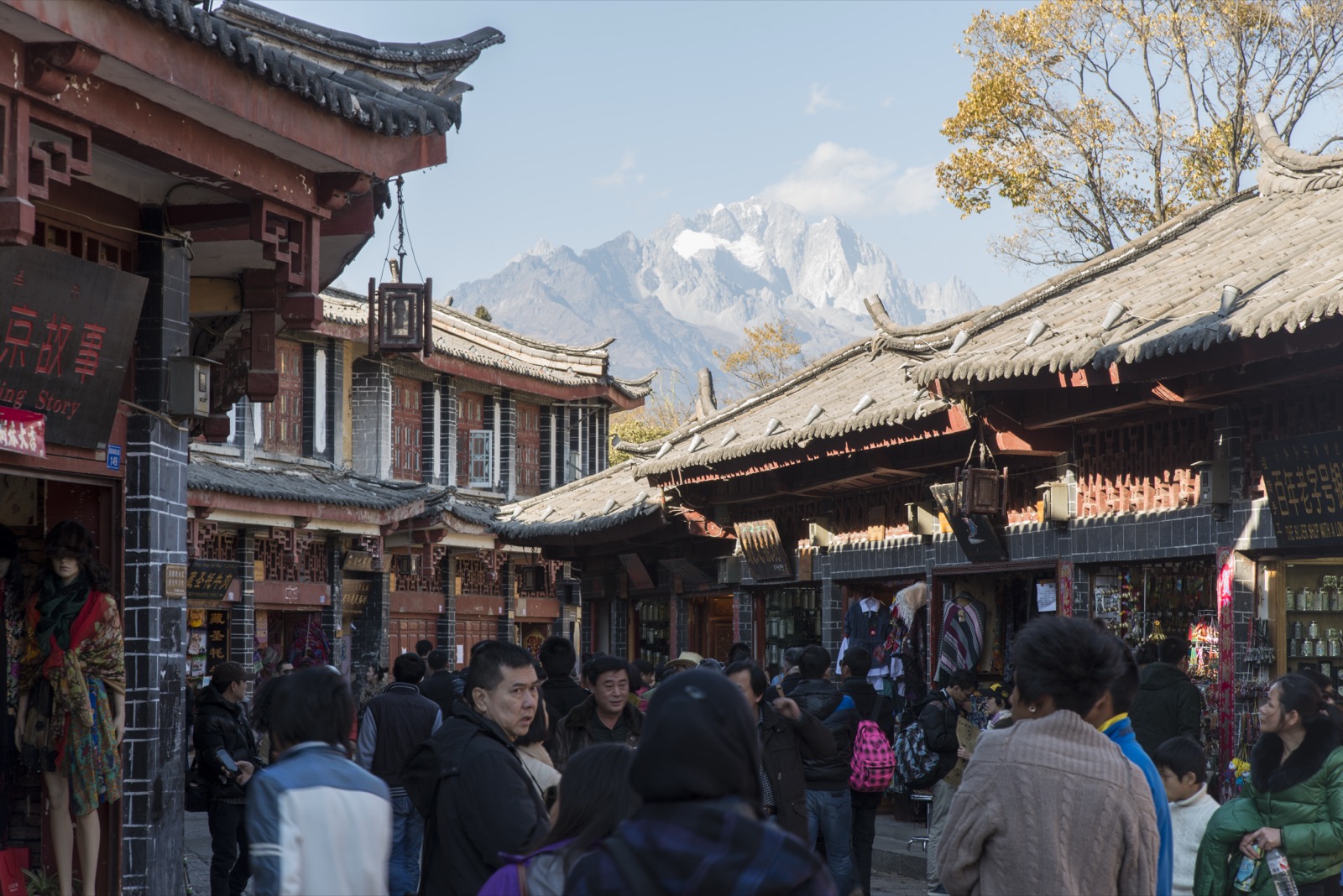
- Lijiang Old Town / 丽江古城: UNESCO World Heritage Site with Naxi history, stone-paved lanes, canals, and traditional wooden architecture. The public lanes are generally free; individual attractions and performances may charge.
- Jade Dragon Snow Mountain / 玉龙雪山: A high-altitude mountain visit with multiple cable-car routes and separate tickets. Weather can suspend operations. Confirm the route, release window, passport process, and live forecast before travel, and read the high-altitude guidance.
- Tiger Leaping Gorge / 虎跳峡: A dramatic gorge with both roadside viewpoints and a strenuous multi-day high trail. Current trail and road conditions matter more than a fixed seasonal rule; check local closure information before hiking.
- Shuhe Old Town / 束河古镇: Quieter ancient town 10min from Lijiang Old Town, less commercial. Good alternative for accommodation.
- Baisha Village / 白沙村: Small Naxi village near Jade Dragon Snow Mountain, traditional murals, quieter than both Lijiang and Shuhe.
- Impression Lijiang: Outdoor cultural show directed by Zhang Yimou, performed against Jade Dragon Snow Mountain backdrop.
Shangri-La
- Songzanlin Monastery / 松赞林寺: Tibetan Buddhist monastery (Gelugpa order) at roughly 3,300m. Check the current ticket and shuttle arrangement, and plan the visit as part of a gradual high-altitude itinerary.
- Pudacuo National Park / 普达措国家公园: High-altitude national park with lakes, forests, and meadows. ~30min from Shangri-La. Check which sections are open (policies change).
- Dukzong Old Town / 独克宗古城: Tibetan old town with traditional Tibetan architecture, prayer wheels, and guesthouses. Partially rebuilt after a 2014 fire.
- NOTE: Shangri-La was renamed from Zhongdian in 2001 to capitalize on James Hilton’s Lost Horizon. It is a real Tibetan town, not a fictional paradise.
Classic Routes
5 days minimum
- Kunming (1 day): Arrive, Green Lake Park, local food. (Stone Forest day trip if time permits.)
- Dali (2 days): Day 1: Dali Old Town, Three Pagodas, dinner in old town. Day 2: Erhai Lake cycling/e-bike, Xizhou Village.
- Lijiang (2 days): Day 1: Lijiang Old Town exploration (early morning). Day 2: Jade Dragon Snow Mountain (full day).
7 days
- Add Tiger Leaping Gorge (1 day for upper gorge viewpoint, or 2 days for the full high trail hike).
- Or add more relaxed time in Dali/Lijiang.
10 days
-
Add Shangri-La (2 days): take the direct railway from Lijiang and check the live timetable on 12306. Spend 2 days on Songzanlin Monastery, Pudacuo National Park, and Dukezong Old Town, while allowing a gradual pace for the higher altitude.
-
Do not try to cover every stop in 3-4 days. Current trains make the corridor easier, but station transfers, hotel changes, and altitude still consume time. Check Dali-Lijiang and Lijiang-Shangri-La services for your date on 12306.
-
Jade Dragon Snow Mountain cable car sells out quickly in peak season; book as early as the booking window allows.
-
Tiger Leaping Gorge best hiked March-May or September-October.
Food to Try
Yunnan cuisine is diverse, reflecting the province’s many ethnic groups. It is generally less spicy than Sichuan food but features many wild mushrooms, herbs, and flowers.
- Crossing-the-bridge noodles (guoqiao mixian / 过桥米线): Kunming’s most famous dish. A large bowl of hot chicken broth arrives boiling, and you add thin slices of raw meat, vegetables, and rice noodles yourself (they cook instantly in the hot broth). The name comes from a legend about a wife crossing a bridge to bring her husband food.
- Yunnan mushroom hotpot (jun guo / 菌锅): Seasonal (June-August mushroom season is best). Hundreds of varieties of wild mushrooms cooked in a chicken broth. WARNING: Some wild mushrooms are poisonous if not cooked properly; always eat at reputable restaurants where mushrooms are cooked for the correct amount of time. Never eat wild mushrooms raw or undercooked.
- Steam pot chicken (qiguo ji / 汽锅鸡): Kunming specialty. Chicken steamed in a ceramic pot with herbs (often with pseudo-ginseng/tianqi), producing a clear, flavorful soup.
- Dali:
- Rushan / rubing (乳扇/乳饼): Bai ethnic cheese – rushan is a “milk fan” (dried milk sheets fried or grilled), rubing is goat cheese pan-fried. Unique to Yunnan.
- Xizhou baba (喜洲粑粑): Savory or sweet flatbread from Xizhou Village.
- Dali cold chicken noodles (凉鸡米线): Cold rice noodles with shredded chicken and sauce.
- Lijiang:
- Naxi baba (纳西粑粑): Flatbread, savory or sweet.
- Yak meat (牦牛肉): Yak is common in Lijiang and Shangri-La – yak jerky, yak hotpot, yak butter tea.
- Chickpea jelly (jidou liangfen / 鸡豆凉粉): Savory jelly made from chickpeas, served cold with chili and vinegar.
- Shangri-La (Tibetan food):
- Yak butter tea (su you cha / 酥油茶): Salty tea churned with yak butter. An acquired taste; it is warming and calorie-rich for high altitude.
- Tsampa (zanba / 糌粑): Roasted barley flour, usually mixed with yak butter tea and eaten by hand.
- Yak meat and highland barley wine (qingke jiu / 青稞酒).
- Yunnan coffee: Grown in Pu’er region and southern Yunnan. Specialty coffee culture is growing rapidly.
- Flowers in cooking: Yunnan is known for using edible flowers – rose cakes (hua bing), jasmine eggs, flower salads.
Night Experience
- Lijiang Old Town: Bars along the canals (lively, noisy, touristy) in the main square area; quiet bars and tea houses in side alleys. The old town is lit with red lanterns at night. Very atmospheric but also very commercial.
- Dali Old Town: Foreigner Street (Yangren Jie) bars and cafes, more relaxed than Lijiang. Red lanterns along the old town streets.
- Kunming: More local nightlife (not really a tourist nightlife city). Good restaurants and some craft beer bars.
- Shangri-La: Limited nightlife. Small town, high altitude – most visitors rest. Some Tibetan-style bars in Dukezong Old Town.
- Evening bonfire/traditional dance performances in old towns (organized by restaurants or guesthouses, tourist-oriented).
Best Time to Visit
- Spring (March-May): BEST season. Wildflowers, mild temperatures (15-25C at lower altitudes, cooler at higher elevations), clear skies before the rainy season begins.
- Autumn (September-November): BEST season. Clear skies, harvest season, comfortable temperatures (15-22C), fewer crowds after National Day. Good for photography.
- Summer (June-August): RAINY SEASON. Afternoon rain is daily. Landslide risk on mountain roads (especially Tiger Leaping Gorge and Shangri-La roads). Fog often obscures mountain views (you may not see Jade Dragon Snow Mountain at all). BUT: this is mushroom season, which is a draw for food lovers. Kunming remains mild (“City of Eternal Spring”).
- Winter (December-February): Cold conditions at higher elevations can affect roads, trails, and mountain operations. Kunming is generally milder, but check a current forecast for every stop rather than treating Yunnan as one climate zone.
- NOTE: Weather varies dramatically by altitude:
- Kunming (1900m): 15-25C most of year (“City of Eternal Spring”).
- Dali (2000m): Similar to Kunming, slightly cooler.
- Lijiang (2400m): Cooler, larger day-night temperature variation.
- Shangri-La (3300m): Cold even in summer (nights near 5-10C), very cold in winter.
Culture & History
- Most ethnically diverse province: Yunnan has 25 recognized ethnic minorities (out of China’s 55), more than any other province. You will encounter Yi, Bai, Naxi, Tibetan, Dai, Hani, Lisu, and many other cultures.
- Naxi culture: Lijiang is an important center of Naxi culture. Dongba manuscripts use a pictographic writing tradition associated with Naxi ritual specialists, while local music and oral traditions remain part of the region’s living heritage.
- Bai culture: Dali is the center of the Bai people. Bai architecture features white walls, grey tiles, and elaborate painted decorations. Tie-dye (扎染) is a traditional Bai craft. The three-course tea (san dao cha) ceremony is a Bai hospitality tradition.
- Tibetan culture: Shangri-La (Zhongdian) is in the Tibetan cultural region (Kham). Songzanlin is the largest Tibetan Buddhist monastery in Yunnan. Prayer flags, mani stones, and circumambulation are common.
- Southern Silk Road / Tea Horse Road: Yunnan was on the ancient trade route carrying tea from Pu’er and Xishuangbanna north to Tibet and beyond (traded for horses from Tibet). This ancient caravan route is the subject of growing tourism interest.
- Kunming “City of Eternal Spring”: At 1900m elevation, Kunming has a mild climate year-round (15-22C average). Flowers bloom year-round, which is why it earned the nickname.
- Shangri-La rename: Zhongdian County was officially renamed Shangri-La in 2001, after the fictional paradise in James Hilton’s 1933 novel Lost Horizon. The rename was a tourism marketing move.
Accessibility & Tips
- Old-town access varies by lane. Stone paving, slopes, bridges, thresholds, and vehicle restrictions make many sections of Lijiang, Dali, and Shangri-La difficult for wheelchairs and strollers. Ask the local visitor service or accommodation about the easiest gate and route.
- Jade Dragon Snow Mountain: This is a high-altitude visit with boardwalks and steps beyond the cable car. Step-free access is limited. Travelers with medical concerns should seek individual clinical advice rather than relying on a generic oxygen or fitness checklist.
- Tiger Leaping Gorge: The roadside visitor route and the multi-day high trail have very different access requirements. The hiking route includes steep ascents and descents; confirm the current route with the operator.
- Erhai Lake: Road and path conditions vary by section. Choose a short lakeside segment or vehicle-based visit when a full cycling day is not a good fit.
- Kunming city: Relatively flat, modern city with some accessibility.
- Altitude needs a personal plan: ascend gradually where possible, avoid further ascent when symptoms appear, and seek medical help for severe or worsening symptoms. Fitness does not prevent altitude illness. Read the Health & Safety guide and speak with a clinician about personal risk or preventive medication.
- Effort varies by destination and route: city walks, cable-car visits, lakeside paths, and gorge hikes should not be treated as equivalent. Compare elevation, walking surface, and current access before choosing a day plan.
- Bring sunscreen: Yunnan is at high altitude; UV radiation is intense even on cloudy days. SPF 50+, hat, sunglasses.
- Bring layers: Temperature varies significantly between day and night and across elevations. Check the mountain forecast and carry suitable warm and rain protection for the day.
Common mistakes
- Trying to see all of Yunnan in 3-4 days: Direct trains shorten the main transfers, but station access, hotel changes, and altitude still make a rushed multi-stop plan poor value. Use 12306 to check the actual Dali-Lijiang and Lijiang-Shangri-La services for your dates.
- Not checking the Jade Dragon Snow Mountain product carefully: cable-car routes, release windows, passport flows, and weather suspensions change. Confirm the exact product before building the day around it.
- Treating Shangri-La like an ordinary low-altitude stop: its elevation changes the pace and risk profile. Build a gradual route and use personal medical guidance where relevant.
- Ignoring current Tiger Leaping Gorge conditions: Rain, road work, and local closures can change the high trail. Check current conditions locally before starting.
- Underestimating how cold it gets at altitude in winter: Lijiang and Shangri-La are genuinely cold in winter (below freezing at night in Shangri-La). Bring proper cold-weather gear.
- Expecting Lijiang Old Town to be “authentic”: It is very commercialized – every building houses a shop, restaurant, guesthouse, or bar. For a quieter, more traditional Naxi atmosphere, go to Shuhe or Baisha.
- Buying “Naxi cultural” souvenirs that are mass-produced: Most “Dongba” trinkets are factory-made. Buy directly from artisans if you want authentic crafts.
- Not bringing sunscreen: High altitude UV is intense. Sunburn is possible even on cloudy days.
- Booking accommodation deep inside Lijiang Old Town without understanding logistics: Cars cannot enter the old town; you will have to carry your luggage on cobblestone paths, sometimes for 10-15 minutes. Stay near a gate if you have heavy luggage.
See the Attraction Booking guide for general booking checks.
Sources
- Chongsheng Temple Three Pagodas official site (dalisanta.com) for site information.
- China Government/Xinhua and Yunnan transport authority notices for the November 2023 opening of the Lijiang-Shangri-La railway; check current services on 12306.
- Altitude data from geographic references (Jade Dragon Snow Mountain 5596m peak, Glacier Park cable car 4506m, Shangri-La ~3300m, Lijiang ~2400m, Dali ~2000m, Kunming ~1900m).
- Cable car and trail closures are weather-dependent; check local conditions before travel. HSR schedules and flight routes should be verified on 12306 and airline websites at time of travel.