
Current visitor details
Hours, admission, booking and passport guidance below come from the Place record shared by city, itinerary and booking pages. Unverified or stale high-risk claims are not shown as facts.
The Panda Tower's (熊猫塔) former Tuesday closure was cancelled by an official 2026-04-01 notice; the tower now opens on its normal schedule (a separate free tower reservation may still apply).
Valid 2026-04-01 to 2026-12-31Booking
Mandatory real-name timed reservation with a 14-day booking window. Foreign visitors without a Chinese mobile number should use Trip.com or the on-site Cash and Cards window if tickets remain. Daily cap: 85,000.
Plan ahead: Tickets are available for the next 14 days. Reserve before travelling in summer and on holidays because sales stop when capacity is reached.
On site: Available at the 'Cash and Cards service window' (现金及银行卡服务窗口) only when same-day tickets remain; do not rely on it in peak season.
Channels: Official WeChat account / mini-program: 成都大熊猫繁育研究基地 · Authorized platforms: Meituan, Trip.com, Douyin, Tongcheng · On-site 'Cash and Cards' window only when same-day tickets remain
Foreign passport
Foreign-passport online booking is SUPPORTED via the authorized platform Trip.com. The base's own official WeChat/mini-program path effectively requires a Chinese mobile number: the 2026-02-07 official notice states visitors without a Chinese number can buy on Trip.com or at the on-site Cash and Cards window when tickets remain. At entry, passport holders use the non-ID (无身份证) verification lane; the passport used to book must match the ticket (one person / one ticket / one document).
Opening and last entry
March-October: morning entry 07:30-12:00, afternoon entry 12:00-17:00, park clearance 18:00. November-February: morning 08:00-12:00, afternoon 12:00-16:30, clearance 17:30. No weekly closure day. Entry is by booked morning or afternoon time slot.
Admission
Adult 55 CNY (ages 18-59); student 27 CNY (undergraduate and below with valid ID). Free (no reservation): visitors 60+ with original ID, and children under 6 or under 1.3 m with a guardian. The ticket covers one entry in the booked slot only and does NOT include the 30 CNY sightseeing cart.
Visit planning
Allow: 3-4 hours (half-day)
Physical load: moderate
Enter via the South Gate (Metro Line 3 to Panda Avenue, then shuttle 408), where most pandas are; head straight to the Adult Panda Villa and the Sunshine/Moonlight nurseries, which are most active 08:00-10:00, before crowds and midday heat build.
Getting there
South Gate (recommended, where most pandas are): Metro Line 3 to Panda Avenue Station (熊猫大道站), exit A or D, then shuttle bus 408 (2 CNY) to the south gate; shuttle runs roughly 08:00-17:00.
West Gate: Metro Line 3 to Junqu General Hospital Station (军区总医院站), exit B, then shuttle 409 (2 CNY) to the west gate. Direct paid tourist shuttles (~8-10 CNY) also run from Chunxi Road, Kuanzhai Alley, Wuhou Shrine/Jinli, and Chengdu East Railway Station.
Accessibility
- Wheelchair and stroller rental: Wheelchair and stroller rental listed as available on site.
- Sightseeing cart: Paid electric sightseeing cart (30 CNY) reduces walking across the large, hilly park; summer service roughly 07:30-17:30.
A route that makes sense
Arrive at opening; this is the single most important rule.
- Enter at opening and head directly to adult panda enclosures on higher ground. Pandas are fed in early morning and most active eating bamboo.
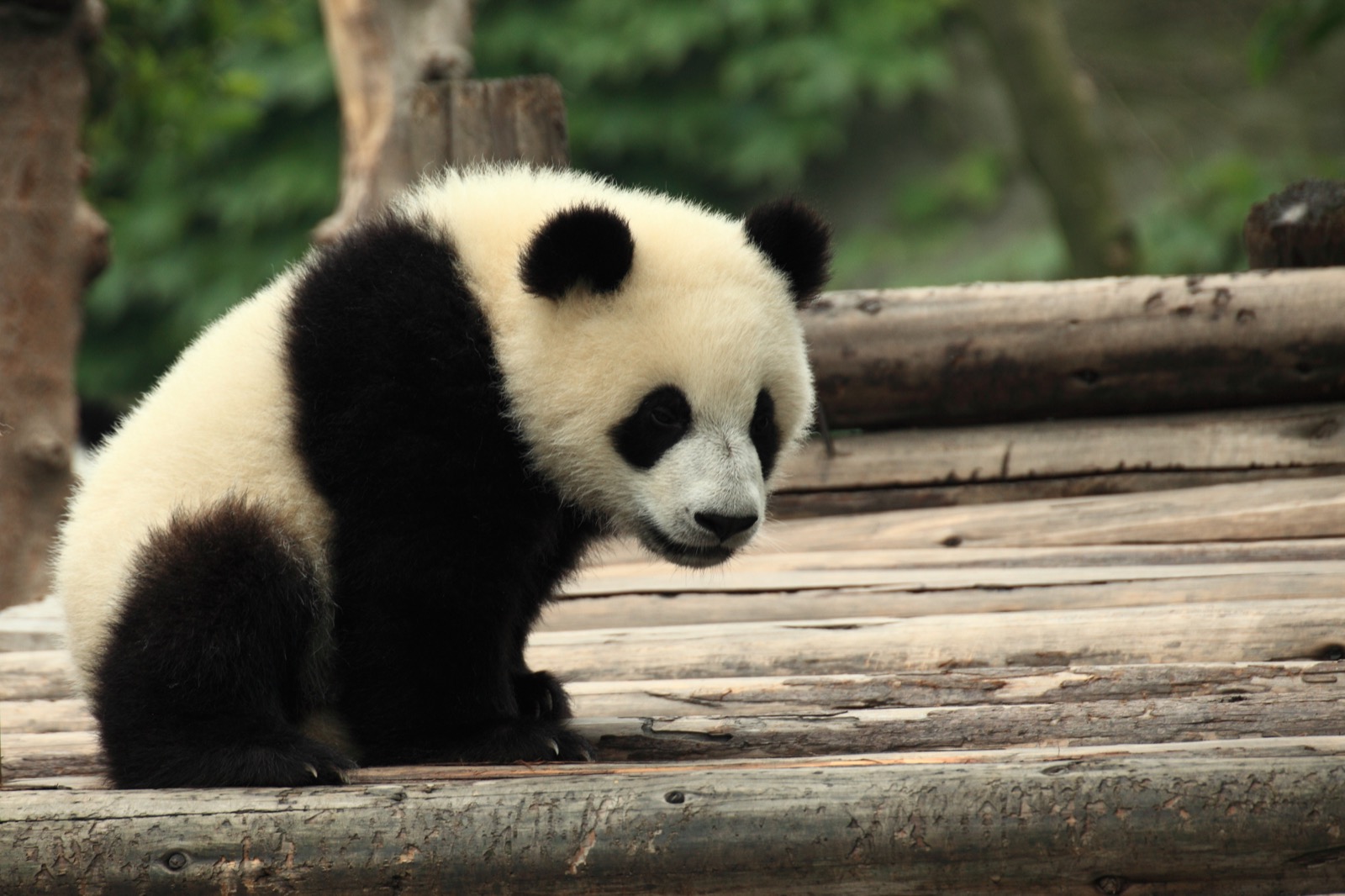
- Adult enclosures. Watch pandas sitting upright consuming bamboo; notice their pseudo-thumbs gripping stalks.
- Juvenile and sub-adult enclosures. Younger pandas are often more playful; look for tumbling, wrestling, and climbing.
- Sunshine Nursery and Moon Nursery. Visit the nursery buildings where infant pandas are visible through glass. Expect crowds at viewing windows.
- Red panda enclosure. Do not miss this separate, smaller species in a wooded lower-canopy area; they are often more visibly active than giant pandas during the day.
- Panda Tower. Climb or take the lift for an overview of the bamboo-forested base. As of April 2026 the tower is open throughout the week.
- Swan Lake and lower gardens. Walk back through landscaped bamboo gardens toward the exit.
- Exit through visitor center.
The paid sightseeing cart reduces walking on hilly terrain but can have queues in peak season.
What to notice
Watching an adult giant panda eat bamboo is the quintessential experience. A panda sits upright, grasps a stalk between its paw and specialized wrist pseudo-thumb, strips the outer sheath with its teeth, and eats the inner pith with concentration. Pandas consume 12 to 38 kilograms of bamboo per day; their digestive systems are inefficient at processing cellulose, which is why they eat so much and rest often.
In juvenile enclosures, watch for tumbling, tree-climbing, and wrestling. In the nurseries, the smallest cubs are kept in incubators or playpens visible through glass. Red pandas are a different family entirely, roughly the size of a large cat with reddish-brown fur, bushy ringed tails, white facial markings, and pointed snouts. They are more arboreal and often move along branches. The base is landscaped with dense bamboo groves rather than concrete pens; most enclosures have both outdoor and indoor areas. The Panda Tower offers a bird’s-eye view of the green space.
Accessibility, fitness and conditions
The base is hilly with paved sloping paths totaling 2.5-3 km for main enclosures. Wheelchair and stroller access is possible on main routes, though gradients can be steep; the paid sightseeing cart is useful for limited mobility or families with young children.
Crowds peak on weekends, national holidays, and July-August. Weekday mornings outside holidays offer the best viewing. The base is open seven days with morning and afternoon time slots.
Pandas are most visible in cool morning conditions, especially spring (March-May) and autumn (September-November). Summer heat drives pandas indoors before mid-morning. Overcast or light rain can be excellent for viewing as cooler temperatures keep pandas outdoors. Winter is quieter and pandas are often active on cool days; Chengdu winters are mild.
How to combine it with nearby places
- Eastern Suburb Memory, a repurposed industrial cultural park, makes a reasonable half-day pairing after a morning at the panda base, as both are in eastern Chengdu.
Most other Chengdu attractions (city center, Wuhou Shrine, Jinli) are across the city and are best saved for the afternoon after resting, or for a separate day. Many visitors dedicate a morning to pandas and spend the afternoon relaxing before an evening of Sichuan cuisine.